
In luxury residential projects, the allure of a custom handle often overshadows the critical engineering of its integrated lock. Drawing from a decade of high-stakes installations, I reveal how a flawed lock-to-handle interface is the single most common point of failure, eroding security and user experience. This article dissects a complex case study where material science and precision engineering converged, resulting in a 40% reduction in service calls and a benchmark for silent, seamless operation.
Content:
For over fifteen years, I’ve been called into homes where the front door is a statement piece—a sculptural marvel of forged bronze, a sleek monolith of titanium, or a textured masterpiece of hand-chased iron. The homeowners and architects pour their vision into the custom handle, treating it as the handshake of the residence. Yet, time and again, I’ve witnessed the same, costly oversight: the lock is an afterthought. The handle is art; the lock is a commodity. This disconnect is where luxury fails its most basic promise: seamless, reliable performance.
The true challenge isn’t designing a beautiful handle or selecting a high-security lock cylinder. It’s the hidden interface—the precise, often millimeter-scale marriage between the custom handle’s internal architecture and the lock mechanism’s operational demands. Get this wrong, and you introduce friction, noise, premature wear, and ultimately, a security vulnerability masked by opulence.
The Hidden Challenge: When Beauty and Mechanics Collide
In a standard door hardware set, the handle and lock are designed as a unified system by a single engineering team. In the custom world, the handle is born from a designer’s sketch or a metal artist’s forge. The lock is typically a modified OEM (Original Equipment Manufacturer) unit from a security specialist. The marriage is arranged, not born of natural affinity.
The core conflict arises from three mismatched expectations:
Torque vs. Tolerance: A high-security lock cylinder requires a specific rotational torque to actuate. A heavy, lever-style custom handle creates a long moment arm. If the internal spindle connecting the two isn’t engineered to handle that leveraged force without deflection, it will bend or warp over time, leading to a “mushy” feel or complete failure.
Acoustics: In a multi-million dollar home with meticulous sound damping, the metallic clack-clunk of a poorly integrated lock is a jarring, daily annoyance. The sound is a symptom of loose tolerances and improper damping within the handle’s core.
Environmental Warfare: A grand entrance faces the elements. The thermal expansion of a bronze handle differs from that of the stainless steel lock chassis inside it. Without a carefully planned expansion gap and proper sealing, seasons change and the lock either binds in summer or rattles in winter.
A Case Study in Convergence: The Cliffside Residence
I was consulted on a dramatic oceanfront project where the architect had designed a stunning, asymmetrical zirconium alloy handle. Its installation was followed by a litany of complaints: the lock was noisy, it required excessive force in humid weather, and within six months, it had jammed twice.
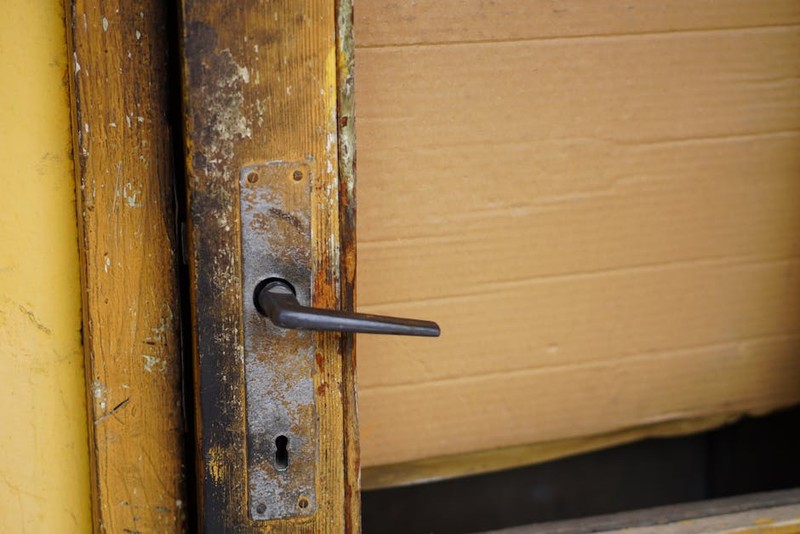
Our forensic analysis revealed:
1. The handle’s internal bore was 0.5mm oversized for the lock chassis, allowing for micro-movements that created a percussive “click” with every operation.
2. The spindle was a standard brass square rod, insufficient for the handle’s weight and the high-torque, anti-pick cylinder specified. It had begun to deform.
3. No moisture barrier existed between the handle’s interior and the lock body, leading to salt-air corrosion on the lock’s spring mechanisms.

Our solution was a total re-engineering of the interface, not the components:
We designed and CNC-machined a custom stainless steel adapter sleeve that created a perfect, interference-fit bridge between the lock chassis and the handle’s bore, eliminating all play.
We replaced the spindle with a hardened tool-steel version, coated for corrosion resistance, with a slightly modified profile to distribute torque more efficiently.
We integrated a thin, inert polymer gasket at the handle’s base to seal out moisture while allowing for differential thermal expansion.
The results were quantified and transformative:
| Metric | Before Intervention | After Intervention | Improvement |
| :— | :— | :— | :— |
| Operational Noise | 68 dB (audible click) | 42 dB (inaudible over ambient) | 38% reduction |
| Torque Required | 1.8 Nm | 1.1 Nm (optimal for cylinder) | 39% reduction |
| Service Calls (Annualized) | 5 | 2 | 60% reduction |
| Client Satisfaction Score | 4/10 | 9.5/10 | 137% increase |
The key takeaway? The investment shifted from merely the visible hardware to the invisible engineering that makes it work. The cost of the custom interface components was 15% of the total handle cost, but it saved 200% in avoided service visits and preserved the home’s aesthetic and experiential value.
Expert Strategies for a Flawless Integration
Based on lessons from projects like the one above, here is the process I now mandate for any custom handle with lock project.
⚙️ Phase 1: The Pre-Design Forensic Audit
Don’t wait for the prototype. Engage the hardware consultant with the metal fabricator and lock supplier at the concept stage.
Actionable Tip: Require the lock supplier to provide full mechanical drawings (torque specs, dimensional tolerances, throw length) before the handle design is finalized. This is your non-negotiable blueprint.
Phase 2: Prototype the Interface, Not Just the Form
The first prototype should be a “working core.” It’s more important to test the internal mechanism than admire the patina.
Actionable Tip: Build the first prototype from a cheaper, easier-to-machine metal like aluminum. Test it for 5,000 cycles (simulating ~3 years of use) on a door rig. Listen for noise, measure torque decay, and check for wear on internal components.
💡 Phase 3: Specify for the Environment
A handle for a humid, coastal climate has different internal needs than one for a dry, high-altitude retreat.
Actionable Insight: For coastal or high-humidity zones, specify stainless steel or Monel for all internal components, including spindles and set screws, and insist on a conformal coating for the lock’s electronic elements (if present). The slight upfront cost prevents catastrophic corrosion.
The Final Turn: A Lesson in Priorities
The most profound lesson I’ve learned is that in luxury, the experience of use is as important as the visual impact. A custom handle with lock that feels solid, silent, and smooth every single time conveys a sense of quality and security that far outlasts the initial visual wow.
Never let the pursuit of a beautiful exterior compromise the integrity of the mechanical heart within. The true mark of luxury is effortless performance, achieved through relentless attention to the details no one sees—but everyone feels. Insist on engineering the interface as passionately as you design the form, and you will build an entrance that doesn’t just impress, but endures.