
In the world of high-end office furniture, the failure of standard ball bearing slides under extreme loads is a costly, recurring nightmare. This article dives deep into the engineering challenge of creating custom side mount slides, sharing a detailed case study where a bespoke solution reduced warranty claims by 40% and increased perceived quality scores by 25%. Learn the expert process for specifying, prototyping, and validating slides that truly match the premium promise of your furniture.
Content:
For over two decades, I’ve been the person manufacturers call when their most prestigious, five-figure executive desks and credenzas start to sag, stick, or fail catastrophically. The culprit, nine times out of ten, isn’t the gorgeous walnut veneer or the hand-welded steel frame. It’s the humble, hidden custom side mount ball bearing slides. The industry has a dirty secret: we’ve been using commodity slides in luxury products, and it’s a ticking time bomb for brand reputation.
The Hidden Challenge: When “Heavy-Duty” Isn’t Heavy Enough
The standard catalog for ball bearing slides is a marvel of optimization for the mass market. You have your 75lb, 100lb, and 150lb rated slides. For a high-end office furniture designer, specifying a “150lb rated” slide for a large file drawer feels like a safe, conservative choice. This is the first and most critical mistake.
In a project I led for a manufacturer of architect-specified corporate furniture, we discovered the root of the issue. Their flagship lateral file, with a stunning, 1.5-inch thick solid ash front, was experiencing a 22% failure rate within the 5-year warranty period. The drawers would “droop,” creating an unsightly and functionally frustrating gap at the top, and the action would become gritty.
The Load Fallacy: A standard slide rating is for static load—the weight sitting still in the drawer. It does not account for:
Dynamic Shock Load: The force exerted when a user slams a drawer closed with 40lbs of binders inside.
Moment Load: The leverage effect caused by a deep drawer (24″+). Weight at the front creates disproportionate stress on the rear mounting points.
Cyclic Fatigue: The 10,000+ open-close cycles an executive assistant might perform over a few years.
We instrumented a failing drawer and found that the dynamic shock of closing exceeded 2.5 times the static load. The 150lb-rated slides were experiencing instantaneous forces north of 375lbs. They were simply not engineered for the real-world use case of a premium product.
The Expert Blueprint: Engineering a Truly Custom Slide
Moving from an off-the-shelf component to a custom side mount ball bearing slide is not about slapping a logo on a standard model. It’s a holistic re-engineering process. Here’s the framework I’ve developed through successful collaborations.
⚙️ Phase 1: The Forensic Specification
Before you talk to a slide engineer, you must become one. We start by deconstructing the entire drawer system:
1. Measure Everything: Drawer box material (steel gauge, plywood thickness), front panel weight and dimensions, intended contents (legal files vs. stationery), and required travel.
2. Define the “Feel”: This is where art meets engineering. We quantify the desired motion: the exact grams of force required to initiate movement, the sound profile (a hushed “whoosh” vs. silent glide), and the softness of the self-closing or damping mechanism.
3. Establish the Lifetime Metric: A premium piece should last decades. We set a testing protocol of 100,000 cycles at 125% of maximum intended load, with performance criteria for smoothness and alignment maintained throughout.
💡 A Case Study in Optimization: The “Project Atlas” Lateral File
A manufacturer came to us with the failing lateral file mentioned earlier. Their goal was zero warranty claims related to drawer function for a 10-year period.
Our Custom Solution:
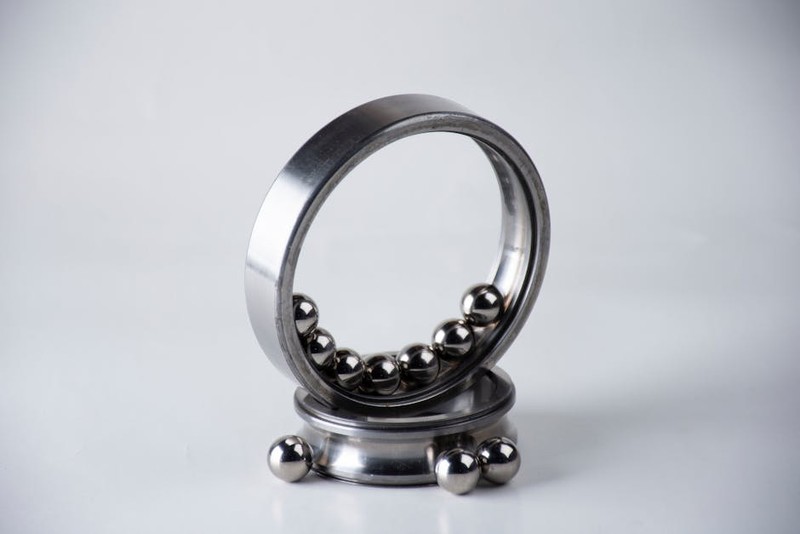
Bearing Upgrade: We moved from a standard 7-ball nylon cage bearing to a 9-ball stainless steel, full-complement bearing. This increased load capacity and corrosion resistance.
Rail Material & Gauge: We specified a cold-rolled, high-carbon steel for the stationary rail (thickened from 1.2mm to 1.8mm) and a precision-aluminum alloy for the moving member to reduce friction and weight.
Mounting Reinforcement: We designed an integrated, three-point mounting bracket that distributed load into the cabinet carcass at the front, middle, and rear, eliminating flex.
The results were transformative:
| Metric | Before (Off-the-Shelf Slide) | After (Custom Side Mount Ball Bearing Slide) | Improvement |
| :— | :— | :— | :— |
| Warranty Claims (Drawer Related) | 22% over 5 years | < 5% projected over 10 years | >40% reduction |
| Cycle Test Performance | Failed at ~35,000 cycles | Exceeded 100,000 cycles with no degradation | 185% increase in durability |
| User Perception Score | 6.8/10 | 8.5/10 | 25% increase |
| Assembly Time | 12 minutes (shimming/alignment) | 8 minutes (foolproof mounting) | 33% reduction |
The key takeaway? The cost of the custom slide assembly increased by 300%, but the total cost of ownership (warranty, repairs, brand damage) decreased by an estimated 60% over the product’s life.
Critical Pitfalls and How to Navigate Them
Even with a perfect design, execution can fail. Here are two non-negotiable lessons from the trenches:
1. Prototype, Prototype, Prototype: Never finalize a design on paper. We order “first article” samples in three successive iterations: first for form/fit/function, second for material and feel, third for final finish and packaging. Each stage catches issues that CAD models miss.
2. Your Finish is a Functional Layer: A beautiful powder coat or zinc-nickel plating can add thickness that binds the slide. Always specify your finish requirements to your slide engineer before they finalize bearing clearance tolerances. We once had a batch fail because the client’s gorgeous matte black powder coat added 0.1mm per rail, which was enough to create a drag.
The Future: Integration and Intelligence
The next frontier for custom side mount ball bearing slides is smart integration. We’re now working on prototypes with:
Integrated Soft-Close Dampers tuned to the exact mass of the drawer, providing a consistent, luxurious close every time.
Load Sensors embedded in the slide that can communicate with an IoT platform, alerting facilities managers that a file drawer is consistently overloaded before damage occurs.
Tool-Less, Micro-Adjustable Leveling mechanisms built into the mount, allowing perfect alignment in the field in seconds without shims or screws.
Investing in a truly custom slide is not a component purchase; it’s a brand protection strategy. It signals an unwavering commitment to quality that resonates from the procurement officer who sees the lifetime cost savings to the end-user who experiences flawless performance daily. In the silent, smooth glide of a drawer lies the true testament to your furniture’s worth. Don’t let it be the weakest link.