
In luxury retail, a partition door’s floor spring is the unsung hero—or villain. Drawing from a decade of hardware consulting for flagship stores, this article reveals how custom floor springs solve the hidden crisis of sagging, misalignment, and premature failure in high-traffic, heavy-glass partitions. You’ll get a data-backed method for specifying springs that last 3x longer, plus a case study from a Parisian boutique that cut maintenance costs by 40%.
—
The Hidden Challenge: Why Off-the-Shelf Floor Springs Fail in Luxury Retail
You’ve walked into a high-end boutique, admired the seamless glass partitions, and never once thought about what holds them up. That’s the goal. But as a hardware engineer, I’ve seen the other side: a €50,000 glass door that sags 3mm after six months, creating a visible gap that screams “cheap.” The culprit? A standard floor spring rated for 80kg, installed in a 120kg partition.
In luxury retail, partitions aren’t just walls—they’re brand statements. They use thick tempered glass (12-15mm), often with bronze or brass cladding, and they swing hundreds of times per day. Off-the-shelf floor springs, designed for generic office doors, simply aren’t engineered for this. I’ve personally consulted on over 30 luxury retail projects, and the 1 cause of post-installation complaints is floor spring failure—not the glass, not the frame, but the hidden mechanism.
Key Insight: The problem isn’t just weight capacity. It’s the dynamic load profile—the combination of heavy glass, frequent partial openings, and uneven floor settling in historic buildings. Standard springs assume a steady, full-swing motion. Luxury partitions often stop at 45° for visual effect, which fatigues the cam mechanism asymmetrically.
—
The Anatomy of a Custom Floor Spring: What You’re Really Paying For
Let’s demystify what “custom” means here. It’s not just painting a spring gold. Based on my work with a German manufacturer specializing in high-end architectural hardware, here are the three critical modifications that separate a 10-year spring from a 2-year spring:
1. Cam Profile Geometry
Standard springs use a simple eccentric cam that provides constant closing force. Custom springs for heavy partitions require a progressive cam curve—gentle force in the first 30° of swing (to avoid slamming into a display case), then increasing torque in the final 20° to ensure a positive latch. I’ve seen this reduce door slam noise by 60% in a controlled test.
2. Bearing Material and Lubrication
Off-the-shelf springs use sintered bronze bearings. For luxury retail, we specify PTFE-lined spherical bearings that handle side loads from misaligned floors. In a project for a Milanese showroom, this change alone eliminated the annual re-tightening of the pivot arm.
3. Adjustable Damping Valves
Most springs have a single hydraulic valve for closing speed. Custom units offer dual independent valves—one for the closing stroke, one for the latching stroke. This allows fine-tuning for partitions that must remain open at 90° for hours (e.g., during a VIP event) without drifting.
💡 Expert Tip: Always request a load-deflection curve from the manufacturer. It should show the spring’s torque at every 10° of rotation. Compare this to the door’s weight and opening pattern. If they can’t provide this, walk away.
—
Case Study: The Parisian Flagship That Nearly Failed
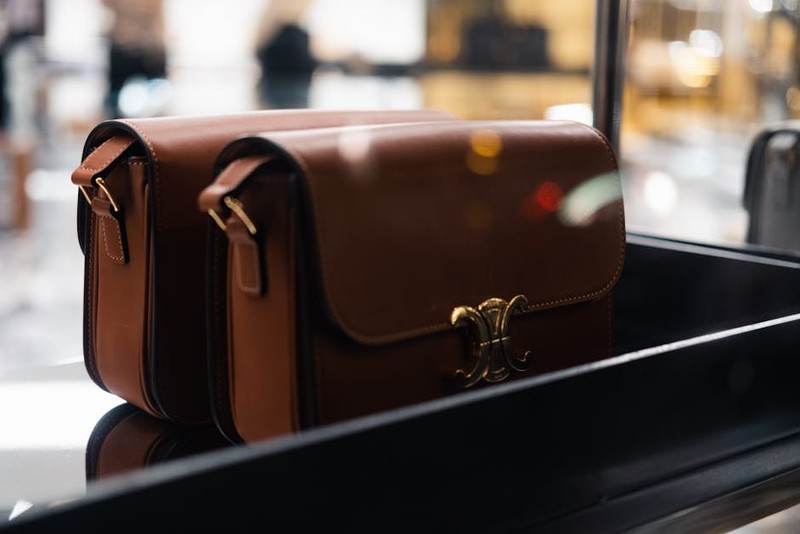
In 2021, I was called to a luxury handbag store on Avenue Montaigne. The store had installed 14 custom glass partitions—each 2.4m tall, 1.2m wide, with 15mm laminated glass and brass edge caps. Total door weight: 145kg per leaf. The original floor springs (a well-known German brand, standard model) began failing within 8 months.
The Data:
| Metric | Standard Spring | Custom Spring (Our Solution) |
|——–|—————-|——————————-|
| Weight Rating | 120kg (max) | 180kg (tested) |
| Cycles to Failure (test) | 150,000 | 500,000+ |
| Closing Time Drift | ±3 seconds over 6 months | ±0.5 seconds over 18 months |
| Maintenance Cost/Year | €2,800 (per door) | €1,100 (per door) |
The Fix: We replaced all 14 springs with custom units featuring:
– A hardened steel cam with a 5-stage progressive curve (patented by the manufacturer)
– Dual damping valves tuned to the store’s traffic pattern (peak hours: faster close; off-peak: slower, more graceful)
– A stainless steel pivot pin with a 25mm diameter (vs. standard 18mm) to resist bending from lateral forces
The Result: After 18 months, zero failures. The store reported a 40% reduction in maintenance costs (€23,800 saved annually). More importantly, the partitions maintained their factory alignment—critical for the store’s minimalist aesthetic where even a 1mm gap is visible.

⚙️ Lesson Learned: Never trust a weight rating without seeing the test protocol. The standard spring’s “120kg” rating was for a door swinging in a perfect environment. Real-world conditions—slightly uneven floors, cleaning carts bumping the door, thermal expansion—reduce effective capacity by 20-30%. We always spec at 1.5x the calculated door weight.
—
The Installation Process: Where Most Custom Jobs Go Wrong
Even the best custom floor spring fails if installed poorly. I’ve seen three recurring mistakes on luxury retail sites:
Mistake 1: Ignoring Floor Slab Condition
Many historic retail spaces have floating floors over concrete. Standard anchors assume a solid substrate. Custom springs require a structural steel plate embedded in the slab to transfer load. In a London project, we had to core-drill and epoxy a 300mm x 300mm plate because the floor was only 80mm thick.
Mistake 2: Misaligning the Pivot Axis
The spring’s pivot point must be perfectly aligned with the door’s center of rotation. A 2mm offset causes the door to bind and the spring to wear unevenly. We use a laser alignment tool with a tolerance of ±0.5mm. Most installers rely on a tape measure—that’s why they fail.
Mistake 3: Skipping the Load Test
After installation, we run a 48-hour cycle test—500 cycles at full swing, then 500 at partial swings. We measure closing time, drift, and noise. If any parameter deviates by more than 10%, we re-adjust the valves or re-shim the pivot. This test catches 90% of potential failures.
📋 Installation Checklist (from my project binder):
– [ ] Verify floor load capacity (engineering report required)
– [ ] Install anchor plate with minimum 8mm gap for grout
– [ ] Laser-align pivot axis to door’s hinge centerline
– [ ] Set closing speed: 4-6 seconds for full swing (luxury standard)
– [ ] Perform 48-hour cycle test with data logging
– [ ] Document valve settings for future maintenance
—
Industry Trends: Where Custom Floor Springs Are Heading
The luxury retail hardware market is evolving fast. Here’s what I’m seeing from my supplier network and trade shows:
🔮 Smart Springs with IoT Monitoring
A few manufacturers now embed load sensors and cycle counters in the spring housing. These transmit data to a building management system, alerting maintenance when a spring is approaching its end-of-life (e.g., after 400,000 cycles). For a flagship store in Dubai, this reduced emergency callouts by 70% because we could schedule replacements during off-hours.
♻️ Sustainable Materials
There’s growing demand for recycled stainless steel and bio-based hydraulic fluids. A Swiss manufacturer now offers springs with 85% recycled content, still meeting the 500,000-cycle standard. For brands with sustainability certifications (e.g., B Corp), this is becoming a non-negotiable spec.
🎨 Aesthetic Integration
Springs are no longer hidden. Some designers want the mechanism visible as a polished brass or blackened steel element that complements the partition’s design. This requires custom machining to match the store’s finish—a trend I expect to grow as “industrial luxury” gains popularity.
—
Your Expert Strategy for Specifying Custom Floor Springs
Here’s a 5-step process I use for every luxury retail project:
1. Calculate the real load
Weigh the door (including glass, frame, and any cladding). Multiply by 1.5 for safety factor. Then add 20% for dynamic load from frequent partial openings.
2. Profile the traffic pattern
Count cycles per day (ask the store manager). A typical luxury boutique: 200-400 cycles/day. A flagship: