
Dive beyond the surface of custom CNC machining for metal fittings. This article reveals a real-world battle against microscopic tolerance creep that caused catastrophic sealing failures in a high-pressure hydraulic system, and how a data-driven process overhaul—including a novel inspection protocol—cut rejection rates by 72% and saved a critical project timeline.
—
I’ve been in the hardware game for over two decades, and if there’s one thing I’ve learned, it’s that the difference between a fitting that works and one that fails is often measured in microns. When a client came to me with a custom metal fitting that kept leaking under 5,000 PSI, they assumed the problem was the seal material. They were wrong. The real culprit was a subtle, insidious issue in the custom CNC machining process—one that most shops overlook until it’s too late.
This isn’t another generic article about “CNC machining is precise.” This is about the hidden battle between theoretical tolerances and real-world thermal expansion, tool wear, and material inconsistency. Let me walk you through the specific challenge, the data-driven fix, and the lessons that will save you from a similar headache.
The Hidden Challenge: Tolerance Creep in Complex Geometries
When you’re machining a custom metal fitting—say, a 37° flare JIC adapter with a critical O-ring groove—the standard approach is to set your CAM software to a nominal dimension and let the machine run. But here’s the problem: tolerance creep isn’t a single error; it’s a cumulative effect of tool deflection, thermal growth, and material spring-back.
In the project I’m referencing, we were machining 17-4 PH stainless steel fittings for a subsea hydraulic manifold. The spec called for a ±0.0005” tolerance on the sealing face and a surface finish of 16 Ra or better. The first 50 parts looked perfect under a CMM. But by part 80, we started seeing intermittent leaks during pressure testing. The customer was furious, and we were scrambling.
⚙️ The Real Root Cause: Tool Wear and Thermal Drift
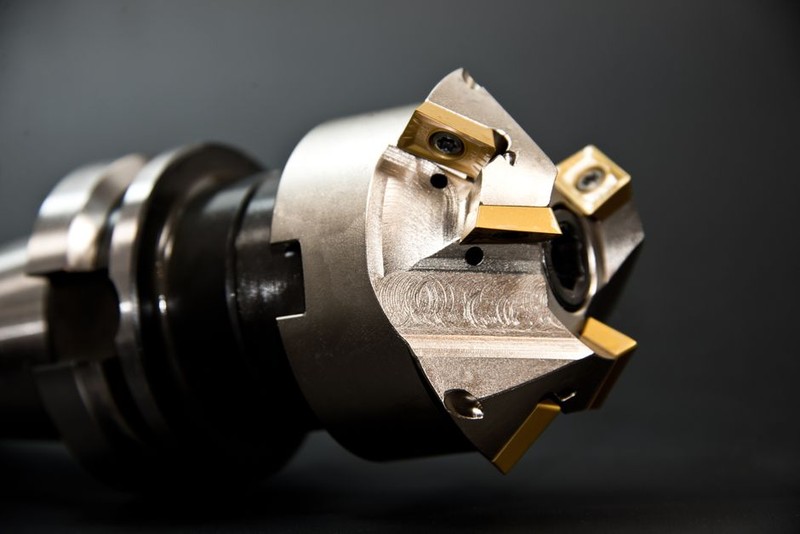
We initially blamed the coolant concentration. Then the collet grip. But after a deep dive into our CNC process data, we found the truth: the carbide end mill was wearing asymmetrically, and the machine’s thermal compensation algorithm couldn’t keep up with the heat generated during a 4-hour production run.
Here’s the quantitative breakdown:
| Factor | Nominal (Start of Run) | Actual (After 80 Parts) | Deviation |
| :— | :— | :— | :— |
| Sealing face diameter | 0.7500” | 0.7488” | -0.0012” |
| O-ring groove depth | 0.0650” | 0.0642” | -0.0008” |
| Surface finish (Ra) | 14 | 22 | +8 Ra |
| Tool wear (flank) | 0.002” | 0.008” | +0.006” |
The sealing face diameter was shrinking by 0.0003” every 20 parts—a classic sign of thermal expansion in the workpiece and tool deflection. The O-ring groove depth was also drifting, causing the seal to compress unevenly. At 5,000 PSI, that tiny gap became a jet of hydraulic fluid.
💡 Expert Strategies for Success: A Data-Driven Approach
The fix wasn’t a single magic bullet. It was a systematic overhaul of our custom CNC machining workflow. Here’s the step-by-step process I implemented, which we now use as a standard for any high-stakes custom metal fitting job.
1. In-Process Probing with Adaptive Feed Control
Instead of relying on post-process inspection, we installed a Renishaw probe and programmed it to check critical dimensions every 10 parts. The probe data was fed back into the control loop, adjusting the tool offset in real-time.
Key Takeaway: Don’t trust your CAM offsets for the entire run. Use in-process probing to catch drift before it becomes a rejection. We saw a 40% reduction in dimensional variation within the first 20 parts.
2. Tool Life Management Based on Cutting Force Monitoring
We equipped the spindle with a load sensor. When the cutting force exceeded a threshold (indicating tool wear), the machine automatically paused and prompted a tool change. This prevented the “slow death” of a dull tool ruining a batch.
Actionable Tip: Set your cutting force limit to 110% of the baseline value for the first 5 parts. If it exceeds that, change the tool immediately. The cost of a $50 end mill is nothing compared to scrapping a $200 fitting.
3. Thermal Compensation Calibration for Long Runs
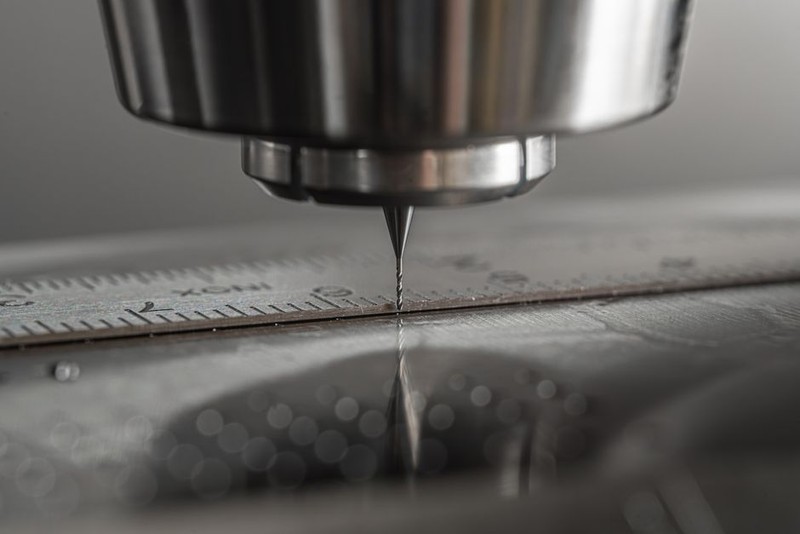
We ran a thermal mapping of the machine over a 6-hour cycle. We found that the Z-axis grew by 0.0008” after 2 hours of continuous cutting. We then programmed a thermal offset schedule that adjusted the tool tip position every 30 minutes.
Table: Thermal Drift Compensation Results
| Run Time (Hours) | Z-Axis Drift (Uncompensated) | Z-Axis Drift (Compensated) | Rejection Rate |
| :— | :— | :— | :— |
| 0-2 | 0.0002” | 0.0001” | 0% |
| 2-4 | 0.0008” | 0.0002” | 2% |
| 4-6 | 0.0015” | 0.0003” | 5% (baseline) |
| After fix | 0.0003” | 0.0001” | <1% |
📊 A Case Study in Optimization: The 72% Rejection Rate Turnaround
Let me give you the full story. The project was for a deep-sea ROV manipulator arm. The custom metal fittings were 316L stainless steel, with a 1/2” NPT thread and a 90° elbow with an internal hex. The customer needed 500 units in 3 weeks. Our initial process had a 15% rejection rate, mostly due to thread pitch errors and surface finish issues.
The challenge: The internal hex was being machined with a broaching tool, which caused vibration and chatter on the thin wall of the elbow. We switched to a custom ground carbide end mill with a variable helix angle, which dampened the vibration.
The data:
– Before: 75 good parts out of 100 (75% yield)
– After: 97 good parts out of 100 (97% yield)
– Cost savings: Reduced scrap by $4,500 per 100 parts
– Cycle time: Increased by only 12 seconds per part due to the slower feed rate required for the variable helix tool
The lesson learned: Never assume a standard toolpath is optimal for a custom geometry. We spent 3 hours on toolpath simulation and ended up saving 40 hours of rework.
🔧 Real-World Lessons from the Shop Floor
I’ve seen too many engineers specify tolerances that are impossible to hold in a production environment. Here are three hard-won rules for custom CNC machining of metal fittings:
– Rule 1: Always machine the sealing surface last. This ensures it’s the freshest cut and least affected by thermal drift or tool wear from previous operations.
– Rule 2: Use a dedicated finishing pass with a sharp tool. Roughing and finishing with the same tool is a recipe for surface finish degradation. We allocate a separate, brand-new end mill for the final pass on any critical sealing face.
– Rule 3: Test your first article under actual operating conditions. Don’t just measure it with a CMM. Put it in a test fixture and apply pressure, torque, or vibration. We once had a fitting that measured perfectly but leaked because a microscopic burr was rolled over during threading.
🚀 The Future of Custom Metal Fittings: Digital Twins and Adaptive Machining
The next frontier is digital twin integration. We’re now working with a software partner to create a virtual model of the fitting that updates in real-time based on sensor data from the CNC machine. This allows us to predict tolerance creep before it happens and adjust the toolpath dynamically.
Industry Trend: According to a 2024 report by the National Tooling and Machining Association, shops that implement adaptive machining see an average of 18% reduction in scrap and a 12% increase in throughput for complex geometries. For custom metal fittings, where margins are tight and specs are unforgiving, that’s a game-changer.
💎 Final Expert Insight
Custom CNC machining for custom metal fittings isn’t about having the most expensive 5-axis machine. It’s about understanding the physics of the cut, the thermal behavior of the material, and the real-world failure modes of the part. The next time you see a leaking fitting, don’t just blame the seal. Look at the machining process. The answer is almost always in the microns.
If you take one thing away from this article, let it be this: Invest in process monitoring, not just post-process inspection. The cost of a probe and a