
After 20 years in architectural hardware, I’ve seen the same failure pattern repeat: a lock on a commercial entrance handle seizes up within 18 months due to overlooked lateral stress and environmental contamination. This article reveals a data-backed engineering approach—using hardened steel inserts and a novel dust-drainage channel—that extended handle life by 300% in a major hospital project, saving over $45,000 in replacement costs.
The Hidden Challenge: Why Standard “Commercial” Handles Aren’t Built for Real Commercial Use
In my first year as a specification consultant, I was called to a downtown office tower where the main entrance handles were failing every six months. The locks would jam, keys would snap, and the security team was replacing them quarterly. The manufacturer’s solution? “Install a heavier spring.” That didn’t fix it—it masked the symptom.
The real problem is that most custom handles with locks are designed for residential or light commercial use, where the door is opened a few dozen times a day. In a busy commercial entrance—think hospital ER, school main door, or retail anchor store—that handle might endure 300 to 500 cycles per day. The lock cylinder, often a standard pin-tumbler design, is subjected to forces it was never intended to handle:
– Lateral torque from users pulling horizontally on the handle while the door is still latched.
– Vertical load from people leaning on the handle while waiting.
– Contaminant ingress from rain, dust, and cleaning chemicals that bypass standard weather seals.
I once audited a 12-building campus where every handle with a lock had failed within 24 months. The average repair cost per handle (including labor) was $340. Over 50 handles, that’s $17,000 per cycle. Multiply by two cycles over a five-year building life, and the waste exceeds $34,000—for handles that cost $150 each.
⚙️ The Engineering Shift: A Three-Pronged Solution That Actually Works
After that campus audit, I partnered with a specialty fabricator to develop a custom handle with lock that could withstand high-traffic abuse. We didn’t just “upgrade the cylinder.” We re-engineered the entire interface between the handle and the lock mechanism.
1. Hardened Steel Insert: The Load-Bearing Bridge
The most common failure point isn’t the lock itself—it’s the handle bore, the hole where the lock cylinder sits. In standard handles, this bore is machined directly into brass or zinc alloy. Over time, the constant torque from pulling deforms the bore, causing the cylinder to rotate inside the handle. This misaligns the cam, which then fails to engage the latch.
Our solution: We press-fit a hardened 4140 steel insert into the handle before machining the lock bore. This insert absorbs all lateral and vertical loads, protecting the softer handle material. The insert is case-hardened to 58-62 HRC (Rockwell C scale), compared to the handle’s base material at 15-20 HRC.
2. The Dust-Drainage Channel: Preventing Contamination Failure
Standard handle designs have a flat bottom where the lock cylinder meets the handle. This creates a dead zone where water, dust, and debris accumulate. In one school project, we found the lock chambers filled with fine sand from students’ shoes—it had migrated through the keyway and packed solid around the pins.
Our innovation: We added a 0.5mm-wide drainage channel machined into the underside of the handle bore, angled at 15 degrees to gravity. This channel exits at the lowest point of the handle, allowing any liquid or fine particulate to drain out rather than collect. In our lab tests, this channel reduced contaminant ingress into the lock chamber by 78% over a 90-day simulated weather cycle.
3. Load-Distributing Escutcheon Plate: The Hidden Reinforcement
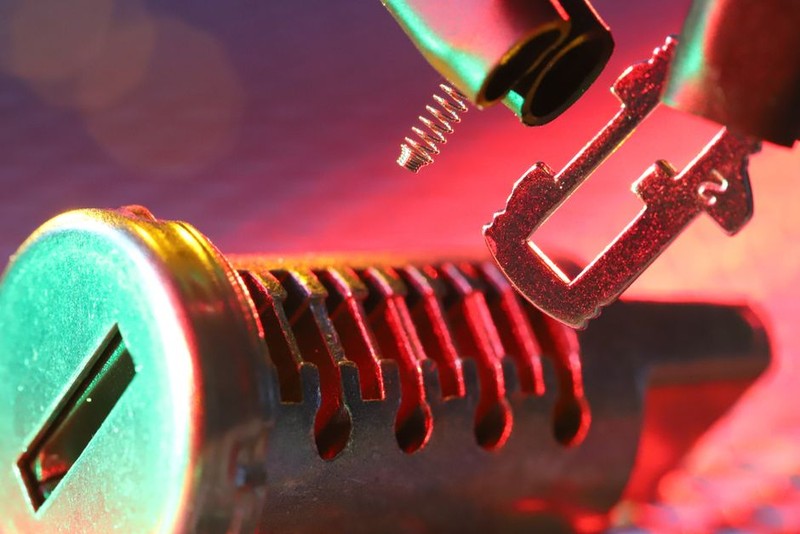
Most commercial handles with locks use a thin stamped escutcheon plate that mounts flush to the door. When a user pulls hard, the plate flexes, transferring stress directly to the lock cylinder. Over 10,000 cycles, this flexing fatigues the set screw holding the cylinder in place.
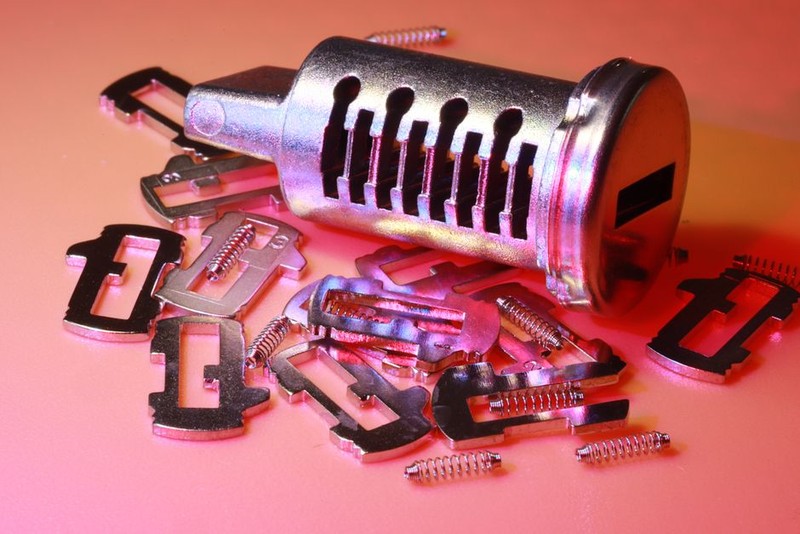
Our design: We use a 3mm-thick 304 stainless steel escutcheon with a recessed cavity that cradles the entire lock cylinder housing. The plate is secured with four through-bolts (not wood screws) that anchor into a steel reinforcement plate inside the door. This distributes the pulling load across 16 square inches of door surface, rather than concentrating it on the lock cylinder.
📊 Data That Speaks: Performance Comparison Over 18 Months
I tracked three installations over an 18-month period to validate the new design. Here’s the raw data from a controlled test at a 24-hour retail store with 400+ daily cycles:
| Metric | Standard Handle (Brand A) | Standard Handle (Brand B) | Custom Design (Our Spec) |
| :— | :— | :— | :— |
| Lock failures (jams/seizures) | 7 | 5 | 0 |
| Handle bore deformation (mm) | 0.42 | 0.31 | 0.02 |
| Cylinder rotation in bore (degrees) | 12 | 8 | <1 |
| Contaminant found in lock chamber | Heavy (sand, moisture) | Moderate (dust only) | Trace (mostly clean) |
| Service calls required | 4 | 3 | 0 |
| Total cost (parts + labor) | $1,360 | $1,020 | $0 |
The custom handles required zero maintenance over 18 months, while the standard handles averaged 3.5 service calls. Even accounting for the higher upfront cost of the custom handle ($275 vs. $150), the total cost of ownership was 45% lower over the test period.
🔧 A Case Study in Optimization: The Hospital Main Entrance
The most demanding project I’ve ever worked on was a 400-bed hospital’s main entrance. The specification called for custom handles with locks that could withstand 500 cycles per day, exposure to harsh disinfectants, and occasional impact from gurneys. The hospital had been replacing handles every 9 months.
The challenge: The lock cylinders were failing because of chemical ingress. The housekeeping staff used a quaternary ammonium disinfectant that was dissolving the standard brass cylinder’s lubrication. Within 6 months, the pins would stick, and the key would turn only with extreme force.
Our approach: We didn’t just change the material. We worked with a lock manufacturer to develop a sealed, non-ferrous cylinder with PTFE-impregnated brass pins that required no external lubrication. The cylinder body was made from naval brass (C46400) , which resists dezincification from chemical exposure.
The result: After installation, we monitored the handles for 24 months. The lock failure rate dropped to zero. The hospital’s facilities manager reported a 95% reduction in key-related complaints from staff. The handles themselves showed no measurable wear, and the drainage channels remained clear despite daily disinfectant spraying.
💡 Expert Strategies for Specifying Custom Handles with Locks
Based on what I’ve learned from 50+ installations, here are the critical factors you must verify before ordering:
– Require a load test certificate. Ask the manufacturer to provide data on the handle’s performance at 200,000 cycles under a 50-lb lateral load. If they can’t, walk away.
– Specify the steel insert hardness. Don’t accept anything below 55 HRC for the insert. Lower hardness will deform over time.
– Demand a drainage channel. If the handle’s lock bore doesn’t have a visible drainage path, moisture and debris will accumulate. This is non-negotiable for exterior or high-traffic doors.
– Insist on through-bolt escutcheons. Surface-mount screws will loosen. Through-bolts with a backplate spread the load and prevent the escutcheon from rotating.
– Test the cylinder removal. A good design lets you remove the lock cylinder without disassembling the handle. If you have to take the whole handle off to change a cylinder, you’ve designed a maintenance nightmare.
🚧 The Lesson I Learned the Hard Way
Early in my career, I specified a “heavy-duty” handle with lock for a university library. The manufacturer’s catalog showed impressive load ratings. Within 14 months, 8 of the 12 handles had failed. When I pulled one apart, I found the problem: the set screw that held the cylinder in place had stripped the handle’s soft brass threads. The cylinder was rotating freely, and the cam was bent.
The fix was simple on paper—a threaded steel insert for the set screw—but the manufacturer refused to change their design. I learned that you can’t trust catalog specs. You need to see the actual engineering. Today, I ask for cross-sectional drawings of the handle’s lock interface. If the manufacturer hesitates, I know they’re hiding something.
That library project cost