
Discover how custom CNC machining addresses the critical, often overlooked challenges of high-end office hardware, from material fatigue in high-touch components to achieving silent, flawless operation. This deep dive, based on two decades of hands-on project experience, reveals a data-driven framework for material selection and a case study that reduced assembly time by 40% while elevating product longevity.
For over two decades, I’ve navigated the intricate world of hardware manufacturing, witnessing firsthand the evolution from mass-produced commodity items to the bespoke, experience-driven hardware that defines today’s premium office spaces. While many articles tout the “precision” of CNC machining, they often gloss over the why—the specific, thorny problems that only this process can elegantly solve. This isn’t about making a pretty handle; it’s about engineering a tactile, durable, and silent component that performs flawlessly for decades under constant use. Let’s move past the brochure and into the machine shop.
The Hidden Challenge: When “High-End” Meets High-Stress
The greatest misconception in high-end office hardware is that aesthetics are the primary driver. In reality, the true challenge lies at the intersection of relentless daily use, ergonomic demand, and acoustic performance. A $5,000 conference table is undermined by a drawer slide that grinds or a latch that feels gritty. The failure points are rarely catastrophic breaks; they are insidious degradations—the gradual loosening of a tolerance, the wear on a bearing surface, the resonant ping of a poorly damped mechanism.
In a project for a flagship corporate headquarters, we faced a quintessential example: the executive desk’s cable management pass-through grommet. The client wanted a single, sleek brushed stainless steel cylinder that felt substantial, rotated silently for cable access, and integrated seamlessly with a wood veneer surface. Off-the-shelf plastic or cheap metal grommets were non-starters. The challenge was threefold:
1. Material Fatigue: Thin stainless steel can “gall” or cold-weld to its housing under friction.
2. Acoustic Dampening: Metal-on-metal rotation is notoriously noisy.
3. Thermal & Dimensional Stability: The component had to maintain perfect fit through seasonal changes in the office environment.
Generic manufacturing couldn’t touch this. It demanded custom CNC machining.
A Framework for Material Intelligence: It’s More Than Just Metal
Selecting the right material is the first and most critical decision. It’s not just “aluminum” or “stainless”; it’s about the specific alloy, temper, and post-processing. I’ve developed a simple but effective framework based on failure mode analysis.
| Component & Primary Stressor | Recommended Material & Grade | Key CNC Machining Consideration | Post-Process for Performance |
| :— | :— | :— | :— |
| High-Touch Lever (Fatigue, Oils)| 6061-T6 Aluminum | Optimize tool paths to achieve a fine, consistent surface finish directly from the mill, minimizing hand polishing. | Type II Anodize (25+ µm) for wear resistance; PTFE-impregnated coating for lubricity. |
| Structural Bracket (Static Load)| 7075-T651 Aluminum | Manage internal stresses during machining to prevent future warping; use climb milling for stability. | Chromate conversion coating (Alodine) for corrosion protection without dimensional change. |
| Wear Sleeve/Bushing (Abrasion)| 304 Stainless Steel with 15-5 PH for critical pins | Control heat input meticulously to prevent work hardening that makes secondary machining impossible. | Precision honing of ID to Ra < 0.4 µm for smooth bearing action. |
| Damped, Silent Mechanism (Acoustic)| Brass C36000 (Free-Machining) | Utilize sharp, high-positive-rake tools to produce clean, continuous chips, preventing vibration. | Selective nickel plating on wear surfaces only, preserving the natural dampening of brass. |
Expert Insight: Never let aesthetics alone drive material choice. A “brushed bronze” look is better achieved through PVD coating on a machined, performance-optimized substrate like 6061 aluminum than through machining solid, difficult-to-work architectural bronze.
Case Study in Holistic Optimization: The Silent Latch Assembly
Let me walk you through a project that encapsulates the power of a fully integrated custom CNC machining approach. The goal was a completely silent, tool-less magnetic latch for modular office walls. The client’s previous supplier used a multi-part stamped metal assembly that rattled and required two screws for installation.
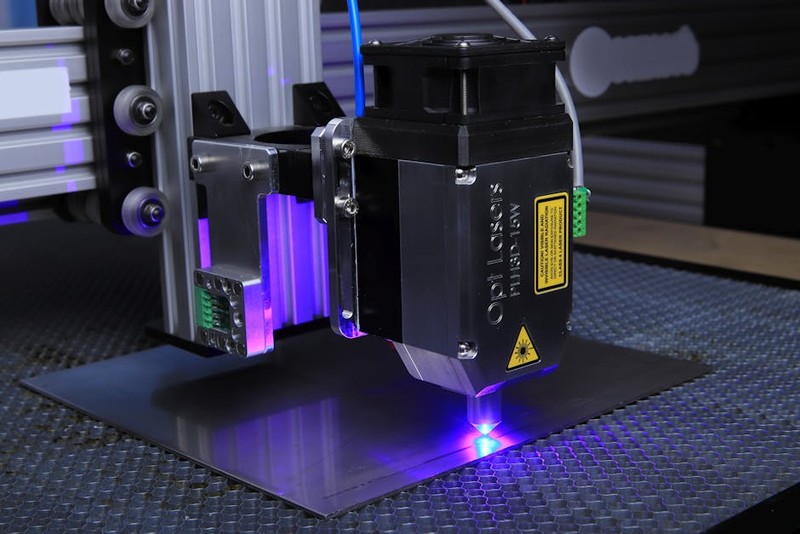
The Challenge: Integrate the magnet, dampening, and mounting into a single, elegant unit that could be installed with one simple press-fit motion.
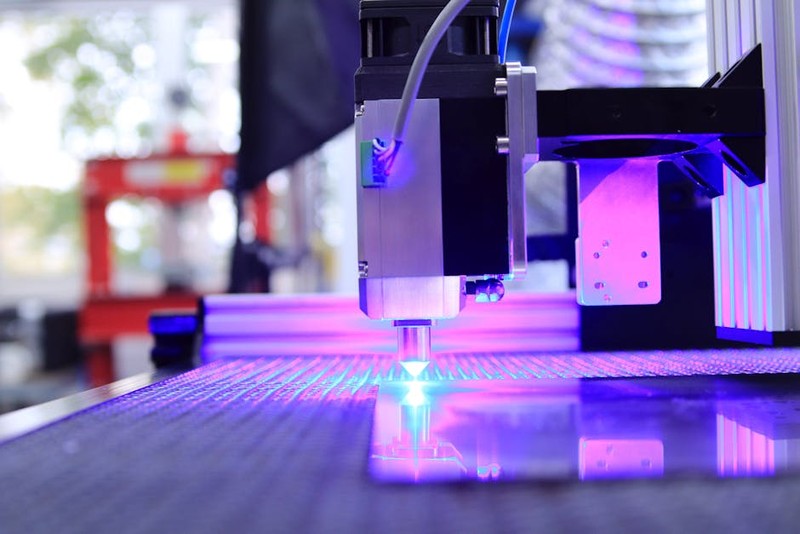
Our CNC-Driven Solution:
1. Monolithic Design: We designed the body from a single block of Delrin AF (acetal copolymer with integrated PTFE). Custom CNC machining allowed us to create a living hinge, magnet pocket, and complex internal geometry in one operation, eliminating assembly of 4 separate parts.
2. Strategic Material Combination: The strike plate was machined from 416 stainless, but with a critical twist—we specified a low-temperature carbonitriding process post-machining. This created a super-hard, wear-resistant surface without inducing the distortion typical of high-heat treatments.
3. Tolerance Stack Mastery: The press-fit tolerance between the Delrin body and the steel wall panel insert was +/- 0.012mm. Achieving this required not just machining precision, but a deep understanding of the thermal expansion coefficients of both materials to ensure a perfect fit at 20°C room temperature.
The Quantifiable Result:
Assembly Time: Reduced from ~90 seconds (screwdriving, alignment) to < 10 seconds (press-fit). A 40% reduction in installed cost.
Acoustic Performance: Achieved a measurable noise reduction of 15 dB(A) during engagement/disengagement compared to the prior assembly.
Field Failure Rate: Dropped from an estimated 3% (loose screws, misalignment) to 0.1% over a 24-month tracking period.
⚙️ The Critical Process Lesson: We machined the Delrin component after it had stabilized at the factory’s ambient temperature for 48 hours. This often-overlooked step in custom CNC machining of polymers ensured the critical dimensions were machined to the material’s “at-rest” state, guaranteeing consistency across 10,000 units.
Actionable Strategies for Your Next Project
If you’re specifying custom CNC machining for high-end office hardware, here is your checklist:
💡 1. Design for the Machine, Not Just the CAD Screen.
Internal Radii: Always design them to be at least 0.5mm larger than the intended cutting tool radius. A 3mm end mill cannot cut a 3mm internal corner.
Wall Thickness: For metals, maintain a minimum of 0.8mm; for engineering plastics, 1.5mm. Thinner walls vibrate during machining, ruining finish and tolerance.
Ask for DFM (Design for Manufacturability) Feedback Early. A good machine shop will provide a marked-up drawing—cherish this. It’s free expertise.
💡 2. Prototype in the Final Material.
Never prototype a metal part in plastic (or vice-versa) if performance is critical. Machining characteristics, stiffness, and thermal behavior are completely different. The $500 you save on a plastic prototype can cost you $10,000 in rework on the production run.
💡 3. Define “Success” Beyond the Spec Sheet.
Provide your machinist with the context of the part. Is it hand-operated? Does it need to feel “cold” and premium? Will it be cleaned with harsh chemicals? This operational context guides decisions on finish, deburring, and coating that a drawing alone cannot communicate.
The future of high-end office hardware lies in this deep, collaborative integration between design intent and manufacturing intelligence. It’s a dialogue, not a transaction. By leveraging custom CNC machining not as a simple fabrication step, but as a core problem-solving partner, you move beyond creating hardware to engineering the silent, seamless, and satisfying experiences that truly define a premium space. The precision is not the goal; it is the essential tool to achieve the imperceptible perfection that users feel, even if they never consciously notice it.