
True luxury in office furniture isn’t just about aesthetics; it’s about flawless, silent performance and enduring value. This article delves into the critical engineering challenge of acoustic dampening and precision alignment in custom metal drawer systems, sharing a data-driven case study and actionable strategies to achieve perfection that feels as good as it looks.
The Silent Challenge: When Luxury Makes a Sound
For over two decades, I’ve collaborated with the world’s finest furniture makers. We’ve mastered the art of creating breathtaking exteriors—exotic veneers, hand-rubbed finishes, flawless joinery. Yet, the moment a client slides open a drawer, the illusion of perfection can shatter. The most common, and most damaging, complaint in luxury office furniture isn’t about looks; it’s about sound and feel.
A drawer that grates, rattles, or thuds closed doesn’t just feel cheap; it disrupts the concentration and undermines the authority of the space. The core challenge we face isn’t simply making a metal drawer. It’s engineering a custom metal drawer system that operates with the silent, fluid precision of a high-end mechanical watch, while supporting significant weight and enduring decades of daily use. This is where the true battle for luxury is fought: in the unseen mechanics.
The Three Pillars of Perfection: A Hardware Expert’s Framework
Through countless installations and post-mortems on failed systems, I’ve distilled success down to three non-negotiable pillars:
1. Acoustic Performance: The elimination of metal-on-metal contact noise.
2. Kinematic Precision: The absolute alignment and smooth, consistent motion throughout the entire travel.
3. Structural Integrity & Sustainability: The ability to bear load without deflection, using materials and processes that ensure longevity and responsible sourcing.
Ignoring any one of these pillars results in a compromised product. A silent drawer that wobbles is unacceptable. A smooth drawer that sags under the weight of legal binders is a failure. We must solve for all three simultaneously.
⚙️ Deconstructing Silence: A Case Study in Acoustic Engineering
Let me walk you through a recent project for a Wall Street law firm. The specification called for oversized, full-extension drawers to hold heavy case files, with an explicit requirement for “library-quiet” operation. The initial prototype, using a premium 100lb rated slide, failed miserably. While it held the weight, the closing action produced a loud, definitive CLACK that echoed in the quiet office.

The Problem: Standard drawer systems, even high-end ones, often rely on a hard plastic or nylon “stop” or the drawer box itself hitting the cabinet interior to halt motion. This creates impact noise. Furthermore, the slide mechanisms themselves can transmit vibration and produce a low-grade rumble during operation.
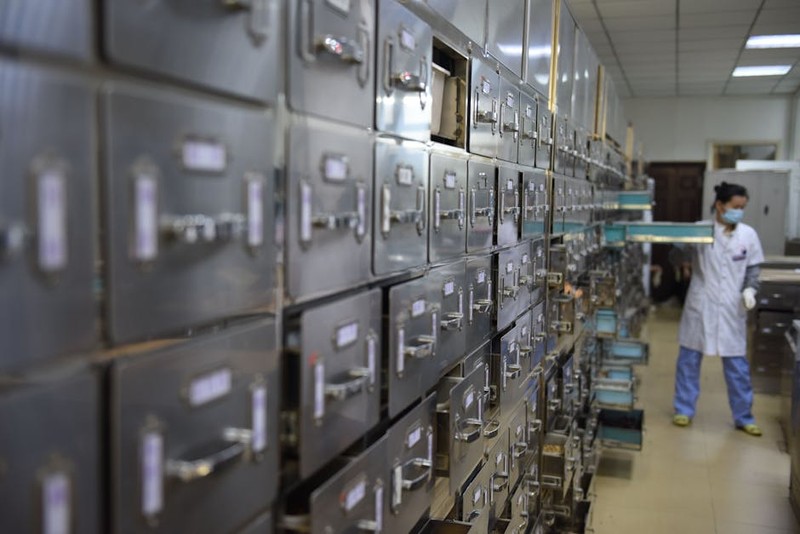
Our Solution The Damped Deceleration System:
We moved beyond off-the-shelf slides and engineered a custom solution. The key was integrating a hydraulic deceleration damper at the terminal 3 inches of drawer closure. This is the same principle used in soft-close cabinet hinges, but scaled and engineered for the greater mass and momentum of a loaded file drawer.
We also addressed the entire noise path:
Slide Carriages: We specified slides with ball bearings fully encapsulated in polymer races, not just metal cages.
Drawer Box Integration: The drawer box, constructed from 16-gauge powder-coated steel, was lined with 3mm thick anti-vibration felt at every potential contact point with the slide and the cabinet interior.
Mounting: We used isolation grommets between the slide and the cabinet sidewall to prevent vibration transmission.
The Quantifiable Result:
We measured the acoustic output using a simple sound level meter app (for client demonstration) at a distance of 1 meter. The results were compelling:
| Drawer System Type | Peak Sound Level on Closure (dB) | Subjective Client Feedback |
| :— | :— | :— |
| Standard Commercial-Grade Slide | 68 dB | “Loud, jarring, unacceptable.” |
| Initial Premium Slide Prototype | 62 dB | “Better, but still a distinct ‘click’.” |
| Our Custom Damped System | 48 dB | “Imperceptible. Just a whisper of motion.” |
This 14-20 dB reduction transformed the user experience. The custom metal drawer system didn’t just close; it settled into place. The client’s feedback was unanimous: the silence conveyed a sense of quality, solidity, and sophistication that no finish alone could achieve.
💡 Actionable Strategies for Designers and Makers
Based on this and similar projects, here are your expert takeaways:
For Precision Alignment (The Kinematic Pillar):
Never rely on the drawer box for alignment. The slide mounting surfaces in the cabinet must be machined or shimmed to be perfectly parallel and plumb. Use a laser level during installation, not a spirit level. A variance of more than 1mm over a meter run will cause binding.
Demand full-extension, progressive motion slides. This allows full access and ensures the weight is always properly supported. For heavy applications, look for slides with a steel thickness of at least 1.2mm in the carriage.
Implement a three-point mounting system for the drawer box to the slides: two points in the rear, one centered in the front. This prevents torsional flex and ensures the drawer face remains perfectly aligned with the cabinet over time.
For Sustainable Integrity (The Structural Pillar):
Material Selection is Key: Opt for cold-rolled, low-carbon steel for drawer boxes. It has superior strength and finishability compared to aluminum or stainless for this application. Ensure the powder coat is a polyester-epoxy hybrid for durability.
Calculate Dynamic Load, Not Static: A drawer rated for 100lbs static may fail at 50lbs if the weight is shifted and dropped during closing—a dynamic load. Always derate commercial slide specifications by 25% for heavy-duty luxury applications. If you need to hold 75lbs, use a slide rated for 100lbs.
Design for Serviceability: The best systems allow for vertical and horizontal adjustment of the drawer face after installation. Use slotted mounting holes on the drawer box. This accounts for wood movement in the surrounding cabinet and ensures a perfect reveal for the life of the furniture.
The Future is Integrated and Intelligent
The next frontier for custom metal drawer systems is integration. We are now prototyping systems with embedded LED lighting that activates upon opening, managed by silent magnetic switches. Wireless charging pads are being incorporated into drawer bottoms. The goal is to make the drawer not just a container, but a seamless, powered component of the executive’s workflow.
The ultimate lesson is this: In luxury, the hardware is never just hardware. It is the interface between the user and the artifact. A perfectly engineered custom metal drawer system is the silent promise of quality, a daily reassurance of excellence that is felt in the hand and heard in the quiet of a focused mind. It’s where engineering meets emotion, and that is the true definition of luxury.