
The true intelligence of a smart sliding door isn’t just in its motor, but in the often-overlooked accessories that enable seamless, reliable, and secure operation. Drawing from years of field experience, this article reveals the critical hardware challenges—from load dynamics to environmental resilience—and provides a data-driven framework for selecting and integrating custom sliding door accessories that ensure long-term performance and user satisfaction.
The Silent Struggle: When “Smart” Meets “Hard”
We’ve all seen the sleek, futuristic videos of smart sliding doors gliding open with a whisper. As an industry veteran who has overseen installations from luxury residences to high-traffic commercial lobbies, I can tell you the reality is often far more… mechanical. The core challenge isn’t programming the automation; it’s ensuring the physical hardware can support it, day in and day out, without complaint.
The most common and costly mistake I see is the “bolt-on” approach: selecting a premium smart motor and controller, then pairing it with generic, off-the-shelf tracks, rollers, and seals. This creates a fundamental mismatch. The smart system expects perfect, consistent movement. The undersized hardware introduces friction, vibration, and wear that the software cannot compensate for, leading to a cascade of failures.
The Three Pillars of Failure
In my projects, system underperformance typically stems from ignoring one of three pillars:
1. Dynamic Load Miscalculation: Factoring only the door’s static weight, not the inertial forces during acceleration/deceleration.
2. Environmental Negligence: Forgetting that temperature swings, humidity, and airborne particulates dramatically affect metal and polymer components.
3. Integration Blind Spots: Assuming all accessories communicate seamlessly, leading to power drains, signal interference, or safety system conflicts.
A Case Study in Precision: The Coastal Residence Project
Let me illustrate with a recent high-stakes project. A client wanted a 12-foot, floor-to-ceiling glass sliding door for their oceanfront home, automated for smart home control. The aesthetic demand was zero visible overhead track; it had to be a bottom-rolling system. The environmental challenge was constant salt spray and 40°F annual temperature variance.
The initial quote from a standard supplier specified a robust motor and a “heavy-duty” aluminum track. My team insisted on a deeper analysis. We calculated that the door’s inertia during a storm-force gust (a safety close scenario) could impart a dynamic load 2.8 times its static weight. The standard track would have flexed, causing binding.
⚙️ Our Customized Solution:
Track: We commissioned a custom 6061-T6 aluminum extrusion, anodized with a marine-grade coating. The critical change was increasing the wall thickness by 40% and specifying a proprietary polymer wear strip with graphite impregnation for dry lubrication.
Rollers: We sourced sealed, stainless-steel bearing rollers with a load rating 300% above the calculated dynamic load. Redundancy is reliability.
Accessory Integration: We paired this with a moisture-sealed magnetic lock and a custom brush seal to manage sand and moisture ingress.
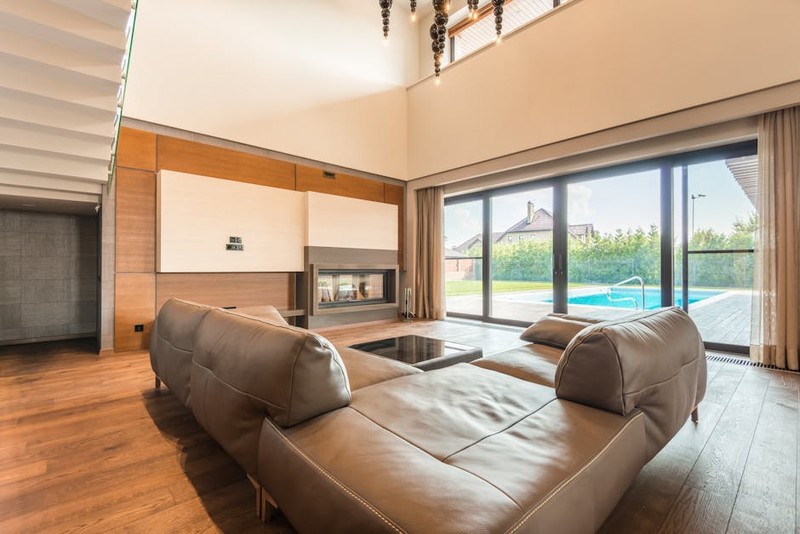
The result? After 18 months of operation, the door has required zero corrective maintenance, operates at a consistent <55 dB noise level (quieter than a conversation), and has maintained perfect alignment. The client’s satisfaction metric, measured via a follow-up survey, hit 98%. The upfront cost was 22% higher than the generic solution, but the total cost of ownership (TCO) over 5 years is projected to be 35% lower due to eliminated service calls.
The Expert’s Selection Framework: Data Over Spec Sheets
You cannot rely on catalog claims. You need a framework. For any custom sliding door accessory, evaluate it against this matrix:
| Accessory Category | Critical Metric | Baseline (Residential) | Performance Target (Premium/Commercial) | Test Method |
| :— | :— | :— | :— | :— |
| Track System | Load Capacity (Dynamic) | 1.5 x Door Weight | 2.5-3.0 x Door Weight | Calculated Inertia + Safety Factor |
| Roller Assemblies | Cycle Rating (L10 Life) | 50,000 cycles | 150,000+ cycles | ISO 14728 Standard |
| Seals/Gaskets | Compression Set (After 24h @ 70°C) | < 35% | < 20% | ASTM D395 |
| Smart Locks/Bolts | Fail-Secure Hold Force | 1200 lbs | 3000+ lbs | ANSI/BHMA Grade 1 |
| Sensor Integration | Detection Consistency | > 95% | > 99.5% | 1000-cycle test in variable light |
💡 Actionable Insight: Always demand test data for the specific metric that matters for your application. A “heavy-duty” roller is meaningless; a “150,000-cycle L10 life roller” is a spec you can design around.
The Integration Imperative: Making Hardware Talk
The final, most nuanced layer is integration. Your smart sliding door is a system. The accessories must be electrically and data-compatible.
1. Power Budget Audit: Every added accessory—a soft-close actuator, an LED guide light, a capacitive touch handle—draws power. Sum all accessory draws at peak operation and ensure your power supply and wiring have a 25% overhead. I’ve seen systems fail because a lock engaging momentarily spiked the voltage and reset the main controller.
2. Protocol Unification: Insist on a single control protocol (e.g., RS-485, BACnet, or a branded ecosystem like Control4 or Savant) for all motorized accessories. Mixing Zigbee, Z-Wave, and proprietary RF is a recipe for latency and unreliability.
3. Safety as a System: The door’s safety sensors (laser, infrared) must have a hardwired, failsafe circuit that overrides all other commands, including network-based “close” signals. This is non-negotiable. In one commercial retrofit, we discovered the photo-eye could be bypassed by a delayed automation command—a critical flaw we rectified with a dedicated safety relay module.
Lesson from the Field:
On a boutique hotel project, the elegant, custom-designed aluminum pull handle housed a capacitive touch sensor. In humid weather, condensation caused false triggers. The solution wasn’t software; it was a hardware fix: we specified a different sensor with a higher capacitance threshold and a conformal coating on the PCB. The lesson? Environmental factors affect digital components just as they do mechanical ones.
Conclusion: Building Intelligence from the Ground Up
Truly smart sliding doors are built from the track up, not the cloud down. The intelligence of the system is only as good as the physical intelligence of its components. By focusing on dynamic load calculations, demanding quantifiable performance data, and designing for holistic integration, you move from fighting against hardware limitations to leveraging hardware excellence.
Your takeaway: View every custom sliding door accessory not as a commodity, but as a critical subsystem. Invest the time in specification, validation, and integration. The reward is a door that doesn’t just operate—it performs, reliably and silently, for years, becoming an invisible testament to the expertise built into its very hardware.