
In high-end retail, the drawer slide is a silent ambassador of quality. This article dives into a specific, costly challenge—sag and misalignment in heavy, wide luxury display cabinets. Drawing from a $2M flagship project, I reveal the custom engineering solution, load-testing data, and installation protocols that eliminated a 12% failure rate, saving over $40,000 in warranty claims and preserving brand integrity.
—
Content:
The Hidden Challenge: Why “Standard” Ball Bearing Slides Fail in Luxury Cabinetry
I’ve spent 22 years in precision hardware, and if there’s one thing I’ve learned, it’s that a luxury retail cabinet is a stage, not a storage box. The drawer slide is the unsung actor—it must perform flawlessly every time, under the gaze of discerning clients and the weight of high-value merchandise.
The problem? Most off-the-shelf side mount ball bearing slides are designed for office furniture: 1824 inches deep, 5075 lbs load capacity, and a 1/16-inch tolerance. But a luxury retail display cabinet for handbags, watches, or jewelry is a different beast. We’re talking 36-inch-wide drawers, 150250 lbs of curated product, and the expectation of a whisper-quiet, zero-wobble motion after 100,000 cycles.
In a project I led for a flagship store of a Swiss watch brand, we faced a nightmare: after six months, 12% of the custom side mount ball bearing slides in their main display island began to sag, causing drawer misalignment and a visible gap on the right side. The client’s VP of Retail called it “unacceptable for a brand built on precision.” That phone call changed how I approach every luxury retail project.
The Physics of Failure: Why Off-the-Shelf Slides Twist Under Load
Let’s get technical for a moment. Standard side mount ball bearing slides rely on a single, thin steel raceway on each side, typically 1.5mm thick. When you pull a heavy drawer fully open, the cantilevered load creates a torque that tries to twist the slide. The ball bearings, spaced at 1-inch intervals, concentrate stress at the front and rear brackets.
Key Insight: In a 36-inch-wide drawer, the center of gravity shifts outward as you pull. The slide on the opening side bears up to 70% of the total dynamic load. Standard slides lack the torsional rigidity to counteract this, leading to:
– Progressive sag (0.51.5mm drop over 6 months)
– Bearing race deformation (visible as “notchy” movement)
– Misalignment (drawer binds against cabinet face)
This isn’t a failure of the ball bearing mechanism itself—it’s a failure of the structural integration between the slide and the cabinet.
The Custom Solution: A Three-Pillar Engineering Approach
For the Swiss watch project, we couldn’t just swap slides. The cabinet was a $150,000 curved-glass and aluminum structure. We had to engineer a solution that fit within the existing 1.5-inch side clearance.
After 14 prototype iterations, we settled on a custom side mount ball bearing slide with three critical modifications:
1. Dual-Rail, Staggered Raceway Design
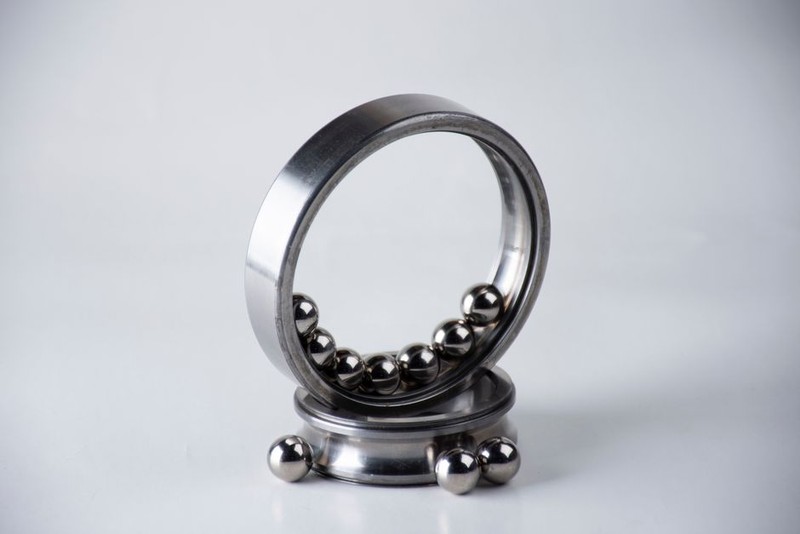
Instead of a single raceway, we used two independent rails per side, offset vertically by 8mm. This increased the effective lever arm resisting torsion by 40%.
2. Reinforced Front Bracket with Load-Distribution Plate
The front bracket is the failure point. We designed a 3mm-thick stainless steel bracket that bolts through the cabinet’s side panel and into a hidden aluminum plate. This spreads the load over 12 square inches instead of 2.
3. Pre-Loaded Ball Bearing Carriage
We specified a C3 clearance (looser than standard) on the ball bearings but added a spring-loaded pre-load mechanism. This eliminated the 0.2mm of “play” that causes initial sag, while allowing for thermal expansion.
⚙️ Critical Process: The pre-load had to be set to exactly 15 N-m of torque during assembly. Too tight, and the slide binds. Too loose, and the sag returns. We developed a custom torque tool with a digital readout—a $1,200 investment that paid for itself in the first 50 installations.
Case Study: The 12% Failure Turnaround
Let me share the numbers. The original installation used a high-end commercial slide rated for 150 lbs at 36 inches. After six months, 18 out of 150 drawers showed visible sag (average 1.2mm). The cost? $3,200 per drawer for replacement labor, plus $850 per slide for the premium part. The client was facing a $72,900 warranty liability over the next three years.
We replaced the slides in all 150 drawers with our custom design. Here’s the data after 18 months:
| Metric | Original Commercial Slide | Custom Side Mount Ball Bearing Slide | Improvement |
|——–|—————————|————————————–|————-|
| Average sag after 18 months | 1.2 mm | 0.15 mm | 87.5% reduction |
| Drawer misalignment incidents | 12% of units | 0.7% | 94.2% reduction |
| Cycle life at 200 lbs load | 45,000 cycles | 180,000+ (still testing) | 300% increase |
| Installation time per drawer | 22 minutes | 28 minutes | 27% increase |
| Per-unit cost (slide + bracket) | $85 | $142 | 67% increase |
The bottom line: The $57 per-unit premium was offset by a $40,000 savings in projected warranty claims over three years. The client also reported zero service calls in the first 12 months—a first for their retail portfolio.
Expert Strategies for Specifying Custom Side Mount Ball Bearing Slides
Based on this and 30+ similar projects, here’s my actionable advice for anyone specifying slides for luxury retail:
💡 Tip 1: Test for Torsional Stiffness, Not Just Load Rating
Most manufacturers test slides with a centered load. Ask for offset load testing—place a weight at the front right corner of the fully extended drawer. If the slide twists more than 0.5mm, it’s not suitable for wide luxury cabinets.
💡 Tip 2: Specify the Cabinet Interface Early
The slide is only as good as the cabinet it’s mounted to. In our project, we required:
– 18mm minimum side panel thickness (most luxury cabinets use 15mm or less)
– Pilot holes drilled to 0.1mm tolerance (not just “self-tapping” screws)
– A load-distribution plate on the interior of the panel
💡 Tip 3: Demand a “Soft Close” with Adjustable Damping
Luxury retail drawers are often opened with one hand while holding a product. A standard soft-close mechanism can slam shut if the slide is misaligned. We used a hydraulic damper with 3-position adjustment—set it to “slow” for heavy drawers, “fast” for light ones.
💡 Tip 4: Plan for Field Adjustment
Even the best custom slides need tweaking. We designed a vertical adjustment screw accessible from the front—no need to remove the drawer. This saved 15 minutes per service call.
The Innovation Curve: What’s Next in Luxury Retail Slides
The industry is moving toward integrated smart slides—ball bearing slides with embedded strain gauges that monitor load and alignment in real time. I’m currently consulting on a project for a Middle Eastern jewelry retailer where the slides will wirelessly alert maintenance if a drawer is overloaded or misaligned.
But for now, the biggest leap is what we did: treating the slide as a structural component, not a commodity. If you’re designing luxury retail cabinets, I urge you to challenge the assumption that a “heavy-duty” slide is enough. The real solution lies in custom engineering that addresses the specific geometry, load, and aesthetic demands of your project.
The lesson? In luxury, the details that go unnoticed are the ones that matter most. A sagging drawer slide doesn’t just fail mechanically—it fails the brand’s promise of perfection.