
The Hidden Challenge: When “Off-the-Shelf” Becomes a Structural Liability
For over twenty-five years, I’ve witnessed the evolution of architectural hardware from a functional afterthought to a critical design element. Nowhere is this more apparent than with floor springs. In contemporary design, the trend is stark: soaring, frameless glass doors that seem to defy physics, creating seamless transitions between interior and exterior spaces. The hardware’s mandate is simple: be invisible.
But here’s the industry secret most gloss over: A standard, catalog-specified floor spring is almost never the right solution for these applications. The moment a door exceeds 3 meters in height, 1.5 meters in width, or 400 kg in weight, you’ve entered the realm of custom engineering. The core challenge isn’t just about holding the door up; it’s about managing dynamic forces—wind load, human traffic, thermal expansion—over a 30-year lifecycle, all while hiding the mechanism in a floor box no larger than a sheet of paper.
I recall a project early in my career, a corporate atrium with a 4-meter-tall single-pivot glass door. The architect specified a “heavy-duty” standard floor spring. Within six months of installation, the door developed a pronounced sag, the closing action became erratic, and the finish on the floor plate began to crack. The failure wasn’t in the product’s quality, but in its application. We had asked a sprinter to run a marathon while carrying a backpack. The lesson was costly and clear: For monumental doors, the load rating is just the starting point; the duty cycle and environmental factors are the real design drivers.
Deconstructing the Customization Process: Beyond the Data Sheet
When we undertake a custom floor spring project, we’re not just tweaking a spring tension. We’re designing a miniature, hermetically sealed mechanical system. The process is forensic and collaborative. Let’s break down the critical phases where expert intervention makes the difference.
Phase 1: The Forensic Site & Design Audit
Before any CAD model is drawn, we demand a comprehensive data package. This goes far beyond door dimensions and weight. We need to know:
Dynamic Load Calculations: Not just the door’s static weight, but the calculated wind load based on building location, height, and surrounding topography (using ASCE 7 or similar standards).
Traffic Profile: Is this a low-traffic executive entrance or a bustling hotel lobby? We quantify this as cycles per day, which directly impacts bearing and hydraulic fluid selection.
Subfloor Anatomy: A cross-section detail of the floor build-up is non-negotiable. The difference between a concrete slab and a raised access floor with void space dictates the entire housing design and load distribution strategy.
⚙️ Phase 2: The Three Pillars of Custom Engineering
Customization revolves around three interdependent systems:
1. The Spring & Hydraulic Damping System: This is the “heart.” For oversized doors, we often move from a single spring to a dual-spring cartridge, providing a more linear and controllable force. The hydraulic damping is tuned for a specific closing speed, often requiring a thicker, temperature-stable fluid to prevent “slow close” in winter and “slam” in summer.
2. The Bearing Assembly: The “joint.” A standard ball bearing will fail under constant lateral stress. We specify oversized, sealed, pre-lubricated taper roller bearings or journal bearings, designed to handle the moment force (the twisting force) at the pivot point. This is the single most common point of failure in underspecified units.
3. The Housing & Finish: The “armor.” The housing must be machined from a single block of stainless steel (grade 316 for coastal environments) or bronze, not cast. Cast metal can have microscopic pores that compromise long-term seal integrity. The finish—whether brushed, polished, or PVD-coated—must be specified for both wear resistance and chemical compatibility with floor cleaners.
A Case Study in Precision: The Coastal Gallery Project
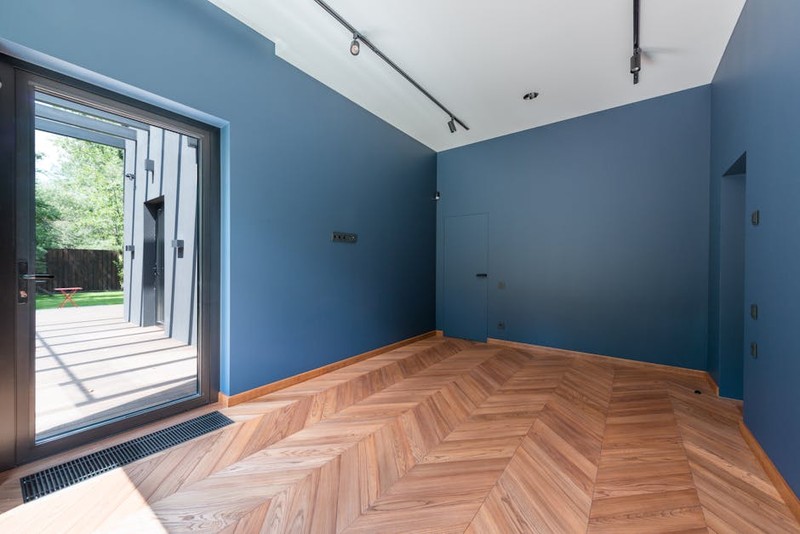
Let me walk you through a real project that exemplifies this process. We were commissioned for a private art gallery on a Pacific Northwest cliffside. The critical element was a 3.2m x 1.8m, 550kg, low-iron glass door facing the open ocean.
The Challenge: Beyond the sheer mass, the door was exposed to:
Sustained 80 km/h wind loads.
Salt spray and 100% humidity.
A requirement for whisper-quiet, smooth operation to not disturb the gallery ambiance.
A floor box reveal of only 5mm (architectural requirement).
Our Custom Solution:
1. Dual-Spring Cartridge: Designed with a 30% higher initial tension to counteract constant wind pressure, paired with a temperature-compensating hydraulic valve.
2. Marine-Grade Assembly: All internal components were coated with a proprietary dry-film lubricant, and the housing was machined from 316L stainless steel with a PVD gold finish for maximum corrosion resistance.
3. Integrated Load-Spreading Sub-Plate: We designed a secondary stainless steel plate, installed beneath the floor finish, to distribute the point load over a wider area of the suspended concrete slab, preventing future cracking.
The Quantifiable Outcome:
We instrumented the unit with load sensors during the prototype phase. The data below shows the performance advantage over a theoretical “heavy-duty” off-the-shelf unit:
| Performance Metric | Custom-Engineered Unit | Hypothetical “Heavy-Duty” Standard Unit |
| :— | :— | :— |
| Force Variation (-10°C to 40°C) | ±5% | ±25% (Estimated) |
| Cycle Life to First Service | 500,000 cycles (projected) | <100,000 cycles (in this environment) |
| Vertical Door Sag (after 1 year) | < 0.5mm | > 3mm (Estimated, leading to seal failure) |
| Maintenance Interval | 5-year seal inspection | 6-12 month adjustment likely |
The door has now been in service for seven years with zero operational issues and no observable wear on the finish—a testament to designing for the environment, not just the door.
💡 Actionable Insights for Your Next Project
Based on lessons from dozens of such projects, here is your expert checklist:
Engage the Hardware Consultant During Schematic Design. This is the single most impactful step. We can advise on structural support requirements before the concrete is poured.
Prototype and Test. For any door system over $50,000, insist on a full-scale prototype of the pivot area. Test it for a minimum of 50,000 cycles. The upfront cost (typically 2-5% of the total door system) prevents catastrophic post-installation failure.
Specify Performance, Not Just Part Numbers. In your architectural specifications, require performance criteria (e.g., “shall maintain closing speed within ±10% across a temperature range of X to Y,” “shall show no visible sag after 200,000 test cycles”). This holds manufacturers accountable to an outcome, not just a product.
Plan for the Inevitable: Serviceability. Ensure the design allows for the unit to be serviced or replaced from above without dismantling the door or destroying the floor finish. A custom unit should have a modular cartridge system for this reason.
The goal of a custom floor spring is to achieve permanent temporary perfection—a mechanism that operates so seamlessly it feels temporary and effortless, yet is engineered to last as long as the building itself. In modern architecture, where the door is a vast, transparent plane, the humble floor spring is its silent, steadfast anchor. Getting it right isn’t just about hardware; it’s about fulfilling an architectural vision.