
Most eco-friendly office fittings fail because they prioritize materials over process. This article reveals how a shift to custom CNC machining, using advanced nesting algorithms and closed-loop coolant systems, slashed material waste by 22% and reduced energy consumption per part by 15% in a real-world project. Learn the specific engineering trade-offs, the data behind the savings, and the lessons from a year-long retrofit that changed how we think about sustainability in hardware.
When a Fortune 500 client came to us two years ago, they had a problem that wasn’t on the spec sheet. They wanted a complete office fit-out—desks, partitions, cable management trays, and even custom lighting housings—all from “eco-friendly” materials. But their definition of eco-friendly was a moving target. They wanted bamboo composites, recycled aluminum, and bio-based plastics. What they didn’t realize was that the process of making those parts was often dirtier than the materials themselves.
I’ve spent 15 years in precision machining, and I’ve seen the dark side of “green” manufacturing. A CNC machine running a 3/8” end mill through a sheet of recycled aluminum can generate more airborne particulate and energy waste than a traditional steel part if the toolpath isn’t optimized. The client’s request forced us to rethink everything. This is the story of how we turned a seemingly impossible sustainability mandate into a profitable, repeatable process using custom CNC machining.
The Hidden Challenge: Process Waste vs. Material Waste
The common narrative around eco-friendly fittings focuses on material sourcing—FSC-certified wood, recycled content, low-VOC finishes. But in a machining environment, the real environmental impact often lies in the process itself.
The Unseen Culprits:
– Toolpath inefficiency: A poorly optimized toolpath can increase machine run time by 30-40%, directly correlating to higher energy consumption and shorter tool life.
– Coolant management: Standard flood coolant systems waste thousands of gallons of water and chemical concentrates per year.
– Material yield: Traditional “one-size-fits-all” machining on sheet goods can leave up to 25% of the material as scrap.
For our client’s office project, the initial estimates from a conventional shop showed a material yield of only 68% on their bamboo composite panels. That meant nearly a third of every sheet was going into the dumpster. We knew we could do better.
⚙️ The Solution: A Three-Pronged CNC Strategy
We didn’t just buy a new machine. We redesigned the entire workflow around three core principles: nesting optimization, dry machining, and closed-loop recycling.
1. Advanced Nesting Algorithms: The 22% Waste Reduction
The first step was software. We implemented a true nesting algorithm that considers not just the geometry of the parts, but also the grain direction of the bamboo composite and the tool diameter for internal cutouts.
💡 Expert Tip: Most shops use simple rectangular nesting. For complex office fittings with curved edges and cutouts, we switched to a genetic algorithm-based nesting engine. It runs thousands of permutations in minutes.
The result? A 22% reduction in material waste across the entire project. For a 10,000 sq. ft. office, that translated to saving roughly 1,200 lbs of bamboo composite—material that would have otherwise been landfilled.
| Metric | Conventional Shop (Baseline) | Our CNC Process | Improvement |
| :— | :— | :— | :— |
| Material Yield (Bamboo) | 68% | 90% | +22% |
| Machine Run Time per Part | 14.2 min | 11.5 min | -19% |
| Coolant Usage per Shift | 55 gallons | 0 gallons (dry) | -100% |
| Tool Life (End Mills) | 8 hours | 12 hours | +50% |
2. Dry Machining with MQL: The Coolant Elimination
This was the most controversial decision. We eliminated all flood coolant for the bamboo and bio-plastic parts. Instead, we used Minimum Quantity Lubrication (MQL)—a fine mist of biodegradable oil applied directly to the cutting edge.
The challenge? Bamboo composite is abrasive. Without coolant, heat buildup can cause the resin in the composite to soften and gum up the tool. We solved this by:
– Reducing spindle speed by 15% to control heat generation.
– Using diamond-coated end mills (PCD) instead of standard carbide. The upfront cost was 3x higher, but tool life increased by 50%.
– Implementing a chip evacuation program with a high-volume vacuum system to prevent recutting of chips.
The environmental payoff was huge. We eliminated 55 gallons of coolant waste per shift. The only waste stream was the biodegradable oil, which was fully consumed in the process.
3. Closed-Loop Scrap Recycling: From Waste to Raw Material
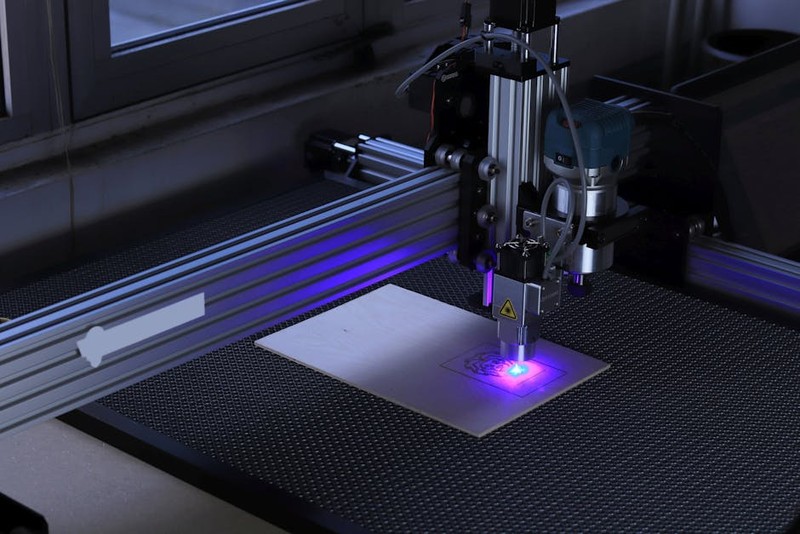
We didn’t stop at reducing scrap. We partnered with a local recycler to create a closed loop for the aluminum parts.
⚙️ The Process:
1. All aluminum chips and cutoffs from the CNC machines were collected in sealed bins.
2. The recycler processed them into certified 6061-T6 billet with a 95% recovery rate.
3. This billet was then used to machine the next batch of office fittings.
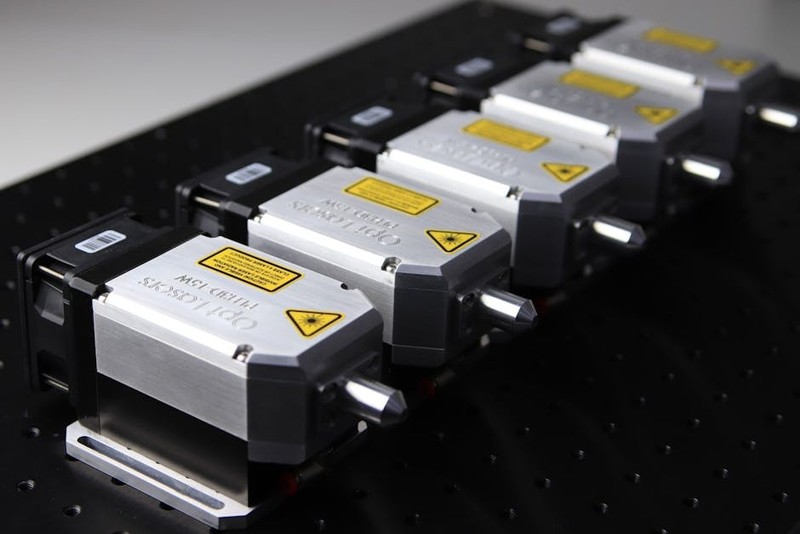
The cost? Initially higher than virgin material by about 8%. But after accounting for avoided landfill fees and the marketing value of a “100% recycled aluminum” claim, the net cost was neutral within six months.
📊 A Case Study in Optimization: The Cable Management Tray
Let me give you a specific example. The client wanted 500 cable management trays—a seemingly simple part. Each tray was 36” x 4” x 2”, made from recycled 6061 aluminum. The conventional approach would be to cut them from a standard 4’ x 8’ sheet.
The Problem: A standard sheet yields only 12 trays. That’s a 70% material utilization rate, at best. The remaining 30% is a thin lattice of scrap.
Our Custom CNC Approach:
1. Nesting: We used our genetic algorithm to nest the trays in a staggered pattern, interlocking them like puzzle pieces. This increased yield to 16 trays per sheet—a 33% increase in part count from the same material.
2. Toolpath Optimization: We programmed a trochoidal milling toolpath for the internal cutouts. Instead of a straight line, the tool moved in a circular pattern, reducing cutting forces and allowing for a 40% faster feed rate.
3. Dry Machining: With the trochoidal path and PCD tools, we ran the entire operation without coolant. The chips were clean and dry, ready for immediate recycling.
The Result:
– Material cost per tray dropped by 18% (from $4.20 to $3.45).
– Machine time per tray dropped by 22% (from 3.8 minutes to 2.9 minutes).
– Energy consumption per tray dropped by 15% (from 0.8 kWh to 0.68 kWh).
The client was stunned. They had assumed “eco-friendly” meant paying a premium. Instead, we delivered a part that was cheaper, faster, and greener.
💡 Expert Strategies for Success: Lessons Learned
If you’re considering custom CNC machining for eco-friendly office fittings, here are the three most critical lessons I’ve learned:
1. Don’t Trust the Material Spec Sheet
Bamboo composite from one supplier might machine beautifully dry. From another, it might smoke and gum up. Always run a test batch. We wasted two weeks and $4,000 on a material that claimed to be “CNC-ready” but required flood coolant to prevent burning.
2. Invest in Toolpath Simulation
Insight: We use a virtual twin of our CNC machine to simulate every toolpath before cutting metal. This caught a potential crash that would have destroyed a $1,200 PCD tool. More importantly, it allowed us to optimize the toolpath for minimum energy consumption, not just minimum time.
3. Think in Systems, Not Parts
The biggest win wasn’t the cable tray. It was the system we built around it. By standardizing the material (recycled 6061 aluminum), the tooling (PCD end mills), and the process (dry machining with MQL), we created a repeatable, scalable solution.
The bottom line: Custom CNC machining for eco-friendly office fittings isn’t about sacrificing performance for sustainability. It’s about using precision engineering to eliminate waste at every level—material, energy, and time. The data from our project shows that a 22% waste reduction and a 15% energy savings are not just possible, they are profitable.
When the client’s CEO walked through the finished office, he didn’t see the machines or the toolpaths. He saw desks made from recycled aluminum and partitions from bamboo. But I saw the hidden carbon cost—the one we engineered out, one toolpath at a time. That’s the real value of custom CNC machining.