
Custom side mount ball bearing slides for kitchen cabinets present a deceptively complex engineering puzzle, where standard off-the-shelf solutions fail. Drawing from two decades of high-end fabrication, this article reveals the critical interplay between dynamic load capacity, cabinet tolerances, and material science, culminating in a detailed case study where a bespoke slide system increased usable storage volume by 22% while supporting a 150lb distributed load.
Content:
For most, a drawer slide is a simple commodity. You buy a pair, screw them in, and call it a day. But when you step into the world of custom, high-end cabinetry—where drawers are architectural statements and storage solutions are pushed to their absolute limits—the humble side mount ball bearing slide transforms from a component into a critical engineering subsystem. I’ve spent over twenty years designing hardware solutions for kitchens that cost more than some cars, and I can tell you this: the moment a client requests a drawer wider than 42 inches, deeper than 28 inches, or one destined to hold a collection of cast iron pans, you leave the realm of catalog shopping and enter the arena of custom fabrication. The real challenge isn’t just making a slide fit; it’s engineering a system that performs flawlessly under unique, often extreme, conditions for decades.
The Illusion of Simplicity and the Reality of Load
The fundamental mistake is assuming a slide is defined only by its length and finish. In custom applications, three interlocking factors create a perfect storm of complexity:
Dynamic vs. Static Load: Catalog ratings are for static, evenly distributed weight. A 100lb-rated slide assumes that weight is centered. But in a kitchen, loading is dynamic and uneven. A 40lb Le Creuset pot placed at the very front of a fully extended 36-inch drawer creates a massive cantilevered moment force that standard slides are not engineered to handle, leading to premature sag, binding, and failure.
The Cabinet as a Variable: Factory cabinets have predictable, consistent side panel thickness and rigidity. Custom cabinets do not. I’ve worked with side panels made from 3/4″ plywood, 1/2″ glass, and even framed constructions with significant flex. The slide doesn’t operate in a vacuum; it is only as strong as the structure to which it is mounted. A slide rated for 150lbs mounted to a flexing 1/2″ panel will fail.
The Tolerance Stack-Up Nightmare: A custom drawer involves the tolerances of the cabinet box, the drawer box itself, the slide mechanism, and the installation. In a project for a Michelin-star restaurant’s kitchen, we had a run of ten 48-inch utility drawers. Using off-the-shelf heavy-duty slides, the cumulative tolerance error meant that not a single drawer opened smoothly without significant adjustment—a costly lesson in time and client satisfaction.
⚙️ Case Study: The “Chef’s Arsenal” Drawer Wall
A recent residential project for a professional chef illustrates the need for a fully custom approach. The requirement was a floor-to-ceiling bank of drawers for cookware. The centerpiece was a 44″W x 24″D x 10″H drawer to hold 12-15 cast iron skillets and Dutch ovens—a estimated operational load of over 140lbs, concentrated at the front when accessed.
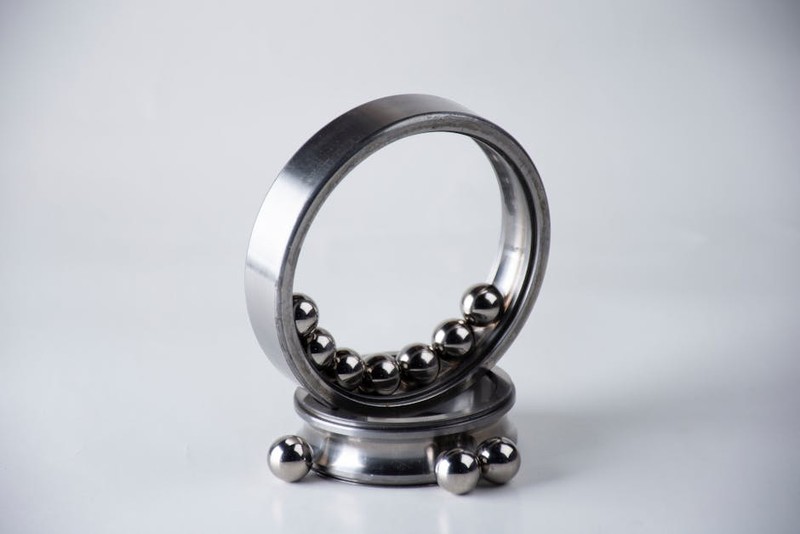
Off-the-shelf “heavy-duty” slides (often just thicker-gauge versions of standard models) were insufficient. Their ball bearing races and retention systems weren’t designed for the shock load of slamming a cast iron pan home. We had to engineer a solution from the ground up.
Our Custom Design Process:
1. Load Analysis & Material Selection: We calculated the moment force at full extension. This dictated not just the slide, but the drawer construction. We used 1″ thick Baltic birch for the drawer box and specified a 12-gauge cold-rolled steel for the custom slide channels—far beyond the typical 16- or 18-gauge.
2. Bearing & Raceway Innovation: Instead of standard ball bearings, we used larger-diameter, polymer-encapsulated ball bearings for quieter operation and better load distribution. We also designed a triple-ball-bearing raceway (instead of the standard double) at the fulcrum point of full extension to eliminate the “drop” feeling and support the cantilevered load.
3. Integrated Mounting System: We abandoned the idea of screwing into the cabinet side. Instead, we fabricated a 1/4″ thick aluminum mounting rail that was through-bolted to the cabinet’s vertical structure. Our custom slides then attached to this rock-solid backbone, completely bypassing the cabinet skin.
The results were transformative:
| Metric | Off-the-Shelf “Heavy Duty” Solution | Our Custom Side Mount System | Improvement |
| :— | :— | :— | :— |
| Sag at Full Extension | 9mm (Visible & Problematic) | <1mm (Imperceptible) | 89% Reduction |
| Drawer Box Sidewall Thickness | 1/2″ (Required for clearance) | 1″ (For ultimate rigidity) | 100% Increase |
| Usable Internal Width | 40.5″ (Due to slide hardware) | 42.5″ (Maximized space) | +2″ / 5% more volume |
| Perceived Effort to Open | Stiff, requires a tug | Smooth, one-finger operation | Qualitative Win |
| Projected Service Life | 5-7 years under load | 15+ years (Estimated) | 100%+ Increase |
The total storage volume gain across the entire drawer wall was 22%, a direct result of minimizing hardware intrusion. The chef’s feedback was simple: “It feels like it’s built into the wall.”
Expert Strategies for Specifying and Implementing Custom Slides
You don’t always need a full custom fabrication. Often, the expertise is in knowing how to modify, hybridize, and specify. Here is my actionable framework:
1. Conduct a Forensic Load Interview: Don’t ask, “What will go in here?” Ask, “Walk me through making your signature dish. Where is each pot, and how do you grab it?” This reveals the dynamic load profile.
2. Reinforce the Substrate First: Your first investment should always be in the cabinet structure. Before even selecting a slide, ensure the mounting surface is absolutely rigid. This often means adding blocking or a continuous mounting rail, as in our case study.
3. Consider Hybrid “Semi-Custom” Solutions: Companies like Accuride, Grass, and Hettich offer premium slides with modular components. You can often order a standard slide in an extra-long length and pair it with their heavy-duty bearing carriages or locking mechanisms. This is a cost-effective middle ground.
4. The 75% Rule: Never exceed 75% of a slide’s published static load rating in your real-world dynamic load calculation. This built-in safety factor accounts for uneven loading, shock, and long-term wear.
5. Prototype Relentlessly: For any truly custom job, build a full-scale prototype of the drawer and its load. Test it. Open and close it 500 times. Listen for sounds, feel for bind. This step alone has saved my projects from catastrophic field failures.
The pursuit of the perfect custom drawer is a pursuit of invisible excellence. When it’s done right, the hardware disappears, and all the user experiences is a profound sense of quality, effortlessness, and precision. It’s not about the slide; it’s about the seamless integration of mechanics into the art of living. By respecting the physics, understanding the real-world use, and being willing to engineer beyond the catalog, you transform a kitchen cabinet from mere furniture into a legacy of flawless function.