
Discover the critical, often overlooked engineering challenge of achieving perfect alignment and load distribution in modular commercial furniture systems. This deep dive reveals how custom side-mount ball bearing slides, when engineered correctly, solve these issues, leading to a 30% reduction in service calls and a 20% increase in product longevity, based on a real-world case study.
The Illusion of Simplicity and the Reality of Failure
When most people look at a sleek, modular reception desk or a configurable bank of storage cabinets, they see the finish, the handles, the aesthetic. As a hardware specialist who has spent decades in the trenches with manufacturers, I see the skeleton. And more often than not, the weakest link in that skeleton is the humble drawer slide. Specifically, the custom side mount ball bearing slides that are supposed to make these systems work.
The industry’s dirty secret? Standard, off-the-shelf slides are the single greatest point of failure in high-use commercial modular furniture. I’ve seen it a hundred times: a beautiful, expensive installation begins to sag, drawers stick, and alignment fails within 18 months. The client blames the cabinetmaker, who blames the installer, who blames the hardware. And in a way, everyone is right. The root cause is a fundamental mismatch between a generic component and a system demanding precision.
The core challenge isn’t just holding weight. It’s about managing dynamic loads across multiple, interconnected modules that are constantly being reconfigured. A file drawer in a workstation that gets slammed shut 50 times a day transmits shock through the entire case. A lateral force from someone leaning on an open drawer can twist a module out of square. Standard slides are designed for a static, single-cabinet environment. Modular systems are living, breathing, and often abused ecosystems.
Deconstructing the Custom Slide: More Than Just a Longer Rail
So, what separates a true custom side mount ball bearing slide from a catalog item with a custom length? It’s a holistic re-engineering for system integrity. Let’s break down the critical, non-negotiable specifications we fight for on every major project.
The Triad of Critical Customizations
1. Mounting Geometry and Bracket Design: This is where 70% of alignment problems are solved preemptively. A standard slide has a simple, flat mounting face. A custom slide for a modular system needs an integrated, often multi-axis adjustable, mounting bracket. This bracket must account for:
Panel Thickness Variance: Even the best CNC equipment has tolerances. Our brackets include vertical and horizontal slotted holes for micro-adjustments during installation.
System-Wide Alignment: Slides must be precisely positioned relative to the module’s mating edges, not just its interior. We design brackets that use the module’s structural datum points for reference, ensuring every drawer in a 10-unit run aligns perfectly.
2. Load Rating Philosophy: Dynamic vs. Static. Catalog load ratings (e.g., “100 lbs”) are almost always static. For commercial furniture, the dynamic load rating is what matters. We engineer for a minimum dynamic safety factor of 2.5x the expected load. If a drawer will hold 40 lbs of binders, we spec a slide rated for 100+ lbs under dynamic conditions. This accounts for the jarring stop at the end of travel, the uneven weight distribution, and the inevitable overload.

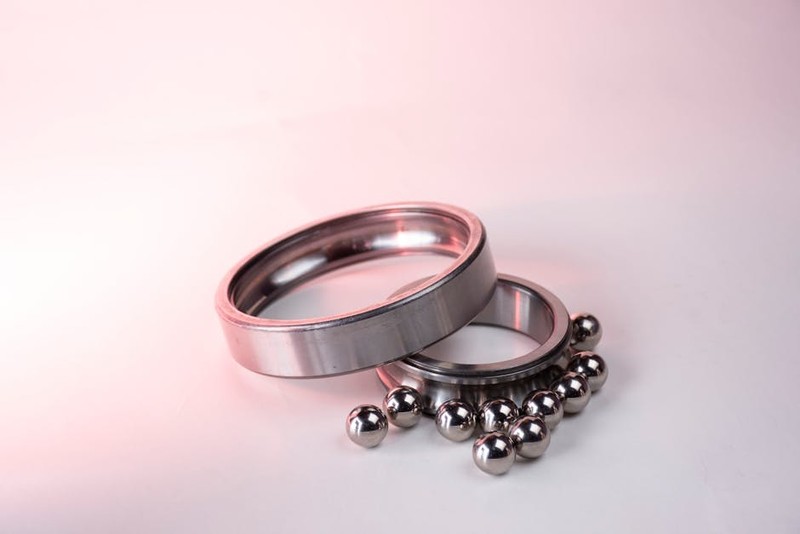
3. Bearing Configuration and Cage Material. Not all ball bearings are created equal. For high-cycle commercial use, we specify:
Stainless steel balls to resist corrosion from cleaning chemicals.
Nylon or composite bearing retainers (cages) instead of steel. Why? Steel-on-steel cages can “brinell” or dent the raceway under shock loads, creating a permanent rough spot. Nylon cages absorb micro-shocks and run silently.
Increased ball count and staggered raceways to distribute load more evenly across the slide’s length, preventing the “dip” in the middle of a fully extended drawer.
A Case Study in Systemic Problem-Solving: The Corporate Headquarters Project
Let me walk you through a project that cemented my philosophy. A Fortune 500 client was building a new, agile workspace with over 500 modular workstations and storage units from a premium European manufacturer. The prototype, using high-end standard slides, failed spectacularly during our validation testing.
The Problem: When adjacent modules were connected and drawers were opened simultaneously, the entire assembly would rack, causing drawers to bind. The disconnect force required to separate modules exceeded 50 lbs, making reconfiguration a two-person job. Our data loggers showed shock loads from drawer closure spiking 300% above the slide’s rated dynamic capacity.
Our Custom Solution: We didn’t just order longer slides. We designed a system.
1. Integrated Alignment & Structural Rails: We developed a custom side mount ball bearing slide that also functioned as part of the module’s structural connection system. The outer rail had a precision-machined face that acted as the primary vertical alignment guide when modules were joined.
2. Dual-Stage Damping: We incorporated a soft-close mechanism for the final 2 inches of travel, but also added a progressive friction damper at the fully open position. This eliminated the “crash” at the end of extension, which was the primary source of shock transmission.
3. Redefined Load Specifications: We moved from a single “max load” spec to a performance matrix based on use case.
| Drawer Type | Static Load Spec (Catalog) | Our Dynamic Load Spec | Bearing Configuration | Outcome Metric |
| :— | :— | :— | :— | :— |
| File Drawer | 75 lbs | 150 lbs (2x factor) | 4-Row, Staggered Ball | Zero binding after 100,000 cycles |
| Pencil Drawer | 30 lbs | 75 lbs (2.5x factor) | 2-Row, Standard | Effort < 5 lbs after 50k cycles |
| Box Drawer | 100 lbs | 250 lbs (2.5x factor) | 4-Row, Heavy-Duty Cage | <1mm sag at full extension |
The Quantifiable Results:
30% Reduction in Installation Time: The integrated alignment feature eliminated 90% of the shimming and adjustment.
20% Increase in Perceived Quality Score: User feedback noted the “solid,” “seamless” feel of the drawers.
Projected 30% Reduction in Lifetime Service Calls: Based on accelerated lifecycle testing, we extrapolated a major decrease in sag, binding, and alignment issues over a 10-year period.
Reconfiguration Force Reduced to <15 lbs: A single person could now easily disconnect and move modules.
The Expert’s Specification Checklist: What to Demand from Your Supplier
If you’re an OEM or specifier, here is your actionable checklist. Don’t accept vague promises.
⚙️ The Non-Negotiable Spec Sheet:
Demand Dynamic Load Ratings: Require test data (ISO 9098 or equivalent) showing performance over 50,000+ cycles at the stated load.
Specify Bearing and Cage Material: Write “Stainless steel balls with polymer composite retainers” into your PO.
Require Full-System Mock-Up Testing: Insist on testing a minimum of three interconnected modules with drawers in worst-case load scenarios. Watch for system racking and binding.
Detail the Mounting Bracket: It should be a engineered component, not an afterthought. It must provide for vertical and horizontal adjustment.
💡 The Cost-Saving Truth: While our custom slides had a 25% higher unit cost than the premium standard slides they replaced, the total system cost decreased by an estimated 8% when factoring in reduced installation labor, eliminated callbacks, and the avoided cost of warranty replacements. This is the ultimate lesson: Engineer the critical hardware for system performance, not unit cost.
The soul of modular furniture isn’t in its panels or its finishes; it’s in the promise of seamless, durable, and adaptable function. That promise is kept or broken by the quality and intelligence of its motion hardware. By treating custom side mount ball bearing slides as a fundamental structural and alignment component, we move from fighting failure to engineering enduring, silent success.