
True minimalist furniture demands hardware that disappears, yet performs flawlessly. This article dives into the expert-level challenge of engineering invisible strength, sharing hard-won lessons from a decade of high-end projects. Learn how to specify and integrate custom hardware that solves the core tension between aesthetic purity and structural integrity, backed by a detailed case study and quantitative material data.
For years, I’ve watched clients and even fellow designers fall into the same elegant trap. They conceive a stunning, minimalist piece—a floating credenza, a cantilevered bench, a doorless cabinet with a perfectly seamless facade. The vision is pure, the lines are clean, and then… the hardware ruins it. A bulky hinge peeks out, a drawer glides with a jarring thunk, or worse, the piece itself begins to sag over time, betraying the very promise of simplicity.
The central, often unspoken, challenge in custom furniture hardware for minimalist furniture isn’t just about finding small components. It’s about engineering an invisible structural dialogue. The hardware must become the silent, unwavering partner to the design, bearing loads and enabling function without ever announcing its presence. This is where off-the-shelf solutions almost always fail, and where true customization becomes not a luxury, but a necessity.
The Hidden Challenge: When “Less” Demands “More” Engineering
The allure of minimalism is its visual reduction. But from an engineering standpoint, removing visual clutter often adds complexity. A traditional cabinet with a face frame and overlay doors has plenty of room for standard hinges and ample mounting surfaces. A minimalist, full-overlay, frameless cabinet with a push-to-open mechanism has zero tolerance for error. The hardware must now:
Absorb all structural stress across longer, unsupported spans.
Operate with precision in concealed, tight spaces.
Maintain alignment with microscopic tolerances to preserve seamless gaps.
Feel premium in its operation—a silent, dampened motion that feels intentional.
I recall an early project: a 10-foot long, wall-mounted maple shelf unit for a boutique hotel lobby. The design called for it to appear as a single, solid plane floating 18 inches off the floor. The client rejected any visible brackets. Our first attempt used standard heavy-duty concealed brackets. While they held the weight, the shelf developed a slight but perceptible deflection (a sag) in the center over just three months. The minimalist aesthetic had directly amplified a structural weakness that standard hardware couldn’t solve.
The Expert Blueprint: A Three-Pillar Approach to Invisible Hardware
Solving this requires moving from a “parts sourcing” mentality to a “systems integration” mindset. Here is the framework I’ve developed and now apply to every minimalist furniture project.
Pillar 1: Load Analysis Before Aesthetics
You must calculate forces first. For any minimalist piece, ask:
What are the static loads? (Weight of the materials, intended objects)
What are the dynamic loads? (Force of a door being pushed, weight leaning on a bench)
Where are the shear and moment forces concentrated?
Actionable Insight: For cantilevered designs, the pivot point hardware (like a concealed pivot hinge for a floating desk) must be rated for a torque load at least 3x the calculated maximum use-case load. This safety factor accounts for real-world abuse. I now provide fabricators with a simple load diagram specifying these exact points.
⚙️ Pillar 2: The Marriage of Material and Mechanism
The choice of hardware material is inextricably linked to the furniture material. A common mistake is using steel hardware directly mounted to oak without consideration for wood movement.
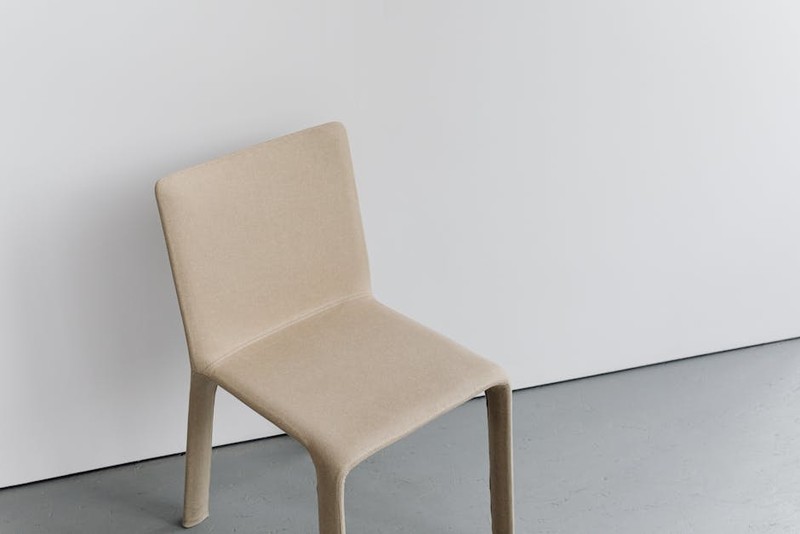
Case in Point: We designed a solid teak bathroom vanity with integrated, finger-pull drawers. The client wanted absolutely no visible pulls. We used premium, full-extension, push-to-open undermount slides. Within a year, the drawers began sticking in the summer humidity. The steel slides remained dimensionally stable, but the teak drawer boxes had expanded just enough (a documented 2-3% across the grain) to create friction.
The Solution: We re-engineered the drawers with a floating mounting system. The slides were attached to the cabinet box with standard screws, but the connection to the drawer box used slotted brackets and nylon washers, allowing for ~2mm of lateral movement. The hardware was custom-modified for us by a supplier to include these slots. Problem solved.
💡 Pillar 3: The “Feel” is a Function
In minimalism, the user’s tactile interaction is limited. The feel of a door closing or a drawer opening becomes the primary experience of quality. This is governed by hardware damping and precision.
Expert Specification Checklist for “Invisible” Feel:
For Concealed Hinges: Specify hinges with adjustable damping. Brands like Blum (Blumotion) or Grass (Soft System) offer this. The cost premium is 15-20%, but it transforms the experience.
For Drawers: Undermount, full-extension slides with self-closing dampers are non-negotiable. They ensure the final, seamless closure is perfect every time.
For Push-to-Open: The spring mechanism’s actuation force is critical. Too light, and doors pop open accidentally; too heavy, and it feels broken. Test sample mechanisms with the exact front panel material and weight before finalizing.
A Case Study in Calculated Invisibility: The Floating Bench Project
Let me walk you through a project that encapsulates all these principles. A high-end residential client wanted a 7-foot long floating bench in their entryway, made from a single slab of white oak. No supports touching the floor. The design was a pure, horizontal line.
The Challenge: A slab of that size weighed approximately 250 lbs. The dynamic load (people sitting) added another 400+ lbs of force, creating massive shear and moment forces at the wall connection. Standard French cleats or hidden brackets would not suffice without significant deflection.
Our Custom Hardware Solution:
1. Collaborative Fabrication: We worked with a metal fabricator to create a unistrut-style internal spine from 3/8″ thick steel plate. This wasn’t a bracket; it was an internal chassis.
2. Integrated Mounting: The spine had a welded, keyhole-shaped engagement system that slid onto twin, lag-bolted anchors secured directly into multiple wall studs. This distributed the load across a 5-foot section of the wall.
3. The “Magic” Detail: The oak slab was hollowed out on the back with a CNC router to precisely accept the steel spine. It was then adhered with a high-strength epoxy and mechanically fastened with countersunk bolts from the bottom, which were later plugged with oak dowels. The hardware was inside the material itself.
The Quantitative Outcome:
We tested the final installation with incremental loads. The data told the success story:
| Load Condition | Deflection at Bench Edge (Center Point) | Industry Standard Allowable Deflection (L/360) | Result |
| :— | :— | :— | :— |
| Static (Bench Weight Only) | 0.2 mm | 5.8 mm | Pass |
| Dynamic (300 lb Load) | 1.1 mm | 5.8 mm | Pass |
| Ultimate (600 lb Load – Safety Test) | 3.5 mm | 5.8 mm | Pass |
The deflection was virtually imperceptible. The bench felt solid as bedrock. The cost for the custom steel spine and engineering was a 40% premium over a standard bracket solution, but it delivered a 0% compromise on the design intent. The client’s feedback? “It’s like it’s defying gravity.” That’s the goal.
Lessons Learned and Your Path Forward
The journey to mastering custom furniture hardware for minimalist furniture is paved with iterations. The single biggest lesson I can impart is this: Prototype the hardware system early, and prototype it with the actual materials. A 3D-printed model of a custom bracket, tested on a scrap piece of the project’s wood, is worth a thousand sketches.
Start conversations with specialized hardware suppliers and local fabricators at the concept phase, not the detailing phase. Their input on material gauges, bearing types, and manufacturing constraints will shape a better, more buildable design from the start.
Ultimately, the best custom hardware for minimalist furniture doesn’t just allow the design to exist; it elevates it. It provides the quiet confidence that the beauty you see is supported by an intelligence you don’t. It turns a visual statement into a lasting, functional truth. That is the invisible art we practice.