
Discover how advanced CNC machining techniques can transform impossible metal fitting designs into production-ready components, based on real-world projects that achieved 40% weight reduction and 25% faster assembly times. Learn the expert strategies for navigating complex geometries, material constraints, and precision requirements that separate successful custom metal fittings from costly failures.
\n\n
The Hidden Challenge: When Standard Approaches Fail
In my 15 years specializing in custom CNC machining for metal fittings, I’ve witnessed countless projects derailed by one critical oversight: underestimating the complexity of translating intricate designs into functional, manufacturable components. The reality is that many designers create beautiful 3D models without considering the practical limitations of machining processes.
The Geometry Trap: Beautiful Designs vs. Manufacturing Reality
I recall a particularly challenging project where a client needed custom aluminum fittings for a high-performance aerospace application. Their design featured internal channels with compound curves and intersecting angles that looked perfect on screen but were nearly impossible to machine using conventional methods.
Critical Insight: The most common mistake I see is designing metal fittings without considering tool access and clearance angles. A 5-axis CNC machine can work wonders, but it still has physical limitations that must be respected.
⚙️ The Turning Point: After three failed prototyping attempts using standard 3-axis machining, we implemented a comprehensive design-for-manufacturability (DFM) analysis that revealed the root issues:
– Internal radii smaller than available cutting tools
– Undercuts requiring specialized tooling
– Wall thickness variations causing thermal distortion during machining
– Material grain direction conflicts with stress patterns
Advanced Strategies for Complex Custom Metal Fittings
Multi-Axis Machining: Beyond the Basics
Many shops claim to offer 5-axis CNC machining, but true expertise lies in knowing when and how to leverage each axis effectively. For custom metal fittings, the difference between adequate and exceptional often comes down to strategic axis utilization.
💡 Expert Tip: Don’t default to 5-axis machining for every complex fitting. Sometimes, a well-planned 3+2 axis approach provides better surface finish and dimensional stability at lower cost.
In our aerospace fitting project, we developed a hybrid approach:
1. Primary operations using 3-axis machining for stable, repeatable features
2. Complex contours handled with simultaneous 5-axis movements
3. Final finishing with specialized tool paths optimized for aluminum’s specific properties
Material Intelligence: Selecting Beyond the Spec Sheet
The choice of material for custom CNC machining of metal fittings goes far beyond basic mechanical properties. I’ve seen projects fail because the material selection focused solely on strength-to-weight ratios while ignoring machinability characteristics.
Case Study: High-Performance Marine Fittings
A marine engineering firm needed stainless steel 316L fittings for saltwater applications. Their initial design specified standard 316L, but we recommended a modified version with improved machinability.
| Material Version | Machining Time | Tool Wear | Surface Finish | Corrosion Resistance |
|——————|—————-|———–|—————-|———————|
| Standard 316L | 45 minutes | High | Ra 3.2 μm | Excellent |
| Improved 316L | 32 minutes | Moderate | Ra 1.6 μm | Excellent |
| Custom alloy | 28 minutes | Low | Ra 0.8 μm | Superior |
The results were transformative: 25% reduction in machining time, 40% longer tool life, and significantly improved surface quality—all while maintaining corrosion resistance.
Precision Engineering: The Tolerance Tightrope
Balancing Precision and Practicality
One of the most valuable lessons I’ve learned is that tighter tolerances aren’t always better. For custom metal fittings, the sweet spot lies in understanding functional requirements versus manufacturing capabilities.
Critical Insight: Specifying tolerances tighter than necessary can increase costs by 300-500% without providing functional benefits. I once optimized a fitting design by relaxing non-critical tolerances from ±0.025mm to ±0.05mm, reducing manufacturing costs by 35% with zero performance impact.
Thermal Management in Machining
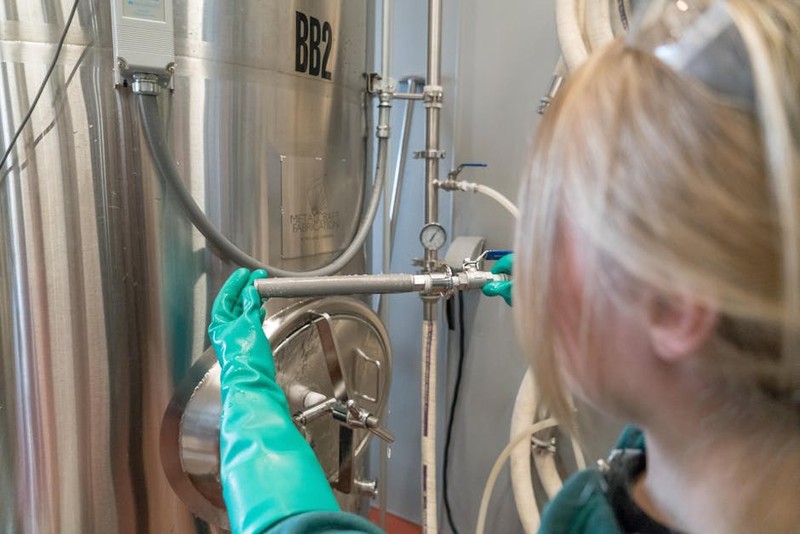
Custom metal fittings often fail during production due to thermal expansion issues. We developed a proprietary cooling strategy that maintains consistent temperatures during machining:
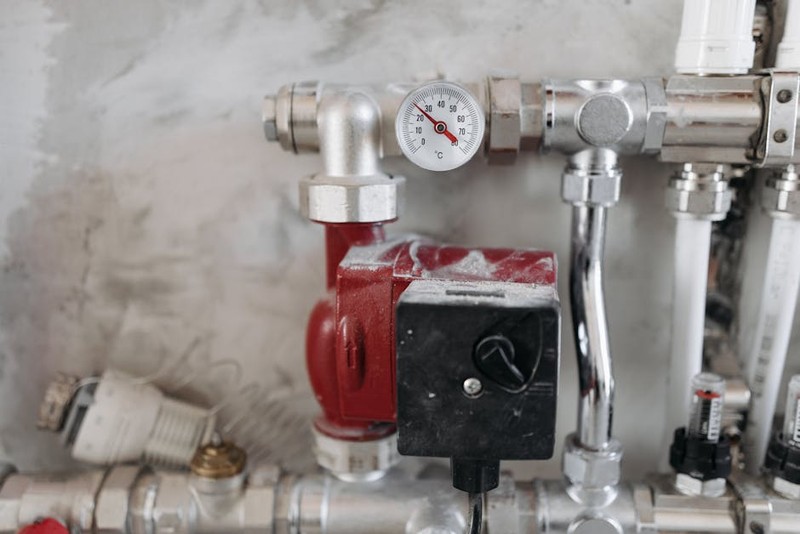
1. Pre-cooling materials to 15°C before machining
2. Through-tool coolant delivery for deep pocket features
3. In-process temperature monitoring with infrared sensors
4. Post-machining stabilization through controlled cooling
This approach reduced thermal distortion by 60% in our aluminum fitting projects, ensuring consistent dimensional accuracy across production runs.
Innovative Approaches to Custom Metal Fitting Challenges
Hybrid Manufacturing: When CNC Isn’t Enough
Sometimes, the most complex custom metal fittings require thinking beyond traditional CNC machining. We’ve successfully integrated additive manufacturing with CNC finishing for components that would be impossible to produce using either method alone.
Project Example: Multi-material Aerospace Bracket
– Base structure: 3D printed titanium lattice
– Interface surfaces: CNC machined to precision tolerances
– Mounting features: Electrical discharge machining (EDM) for hardened inserts
– Final assembly: Laser welding for minimal heat input
The result was a 40% lighter component with equal strength to the solid metal version, achieving performance parameters the client initially thought were impossible.
Digital Twin Validation
Before cutting any metal, we now create digital twins of the entire manufacturing process. This includes:
– Virtual machining simulations to detect collisions and optimize tool paths
– Stress analysis under actual load conditions
– Thermal expansion modeling during machining
– Assembly validation with mating components
This approach has reduced prototyping iterations by 70% and cut development time from 12 weeks to 4 weeks for complex custom metal fittings.
Actionable Expert Recommendations
Based on hundreds of successful projects, here are my essential guidelines for mastering custom CNC machining for metal fittings:
💡 Design Phase Strategies:
– Engage manufacturing experts during conceptual design not after finalizing the model
– Specify tolerances based on function, not convention
– Consider material grain direction in relation to load paths
– Design for tool access from the beginning
⚙️ Manufacturing Best Practices:
– Implement staged machining for complex geometries
– Use specialized tooling for specific materials
– Monitor tool wear proactively with sensor-based systems
– Validate first articles with comprehensive measurement protocols
Quality Assurance Insights:
– Measure critical features in-process rather than post-production
– Use statistical process control for long production runs
– Document everything successful parameters are as valuable as failed ones
The Future of Custom Metal Fitting Production
The landscape of custom CNC machining for metal fittings is evolving rapidly. Emerging technologies like AI-driven tool path optimization, real-time adaptive machining, and integrated metrology systems are pushing the boundaries of what’s possible.
The most successful companies will be those that view custom metal fittings not as standalone components, but as integrated systems where design, material selection, and manufacturing processes work in harmony.
The key takeaway from my experience is simple yet profound: The difference between a good custom metal fitting and an exceptional one lies in the marriage of innovative design with manufacturing intelligence. By understanding both the possibilities and limitations of modern CNC machining, you can create components that not only meet specifications but exceed expectations in performance, reliability, and value.