
Content:
For over two decades, I’ve watched the evolution of modular storage from a hardware perspective. While many focus on aesthetics and configuration, the true soul of a high-end modular wardrobe lies in its movement—the silent, effortless glide of a drawer under full load. Off-the-shelf side mount ball bearing slides are a commodity. But when you step into the world of custom solutions for bespoke modular systems, you enter a realm of precision engineering where a single, often overlooked, physical phenomenon dictates success or catastrophic failure: dynamic cantilevered load management.
The Hidden Challenge: It’s Not Just About Weight Capacity
When a client specifies a modular wardrobe with deep, wide drawers for heavy items like sweaters or files, the standard calculation looks at static load. A slide rated for 45kg (100lbs) should suffice, right? In my experience, this is where 90% of system designers fail. The real enemy isn’t the weight; it’s the moment arm.
Imagine a fully loaded, 900mm wide drawer. When opened halfway, the entire load is cantilevered out from the slide’s rear mounting point. This creates a tremendous twisting force (torque) on the slide chassis and, critically, on the cabinet’s side panel. A standard, full-extension slide isn’t engineered to resist this twisting across a custom width. The result? Drawer sag, binding, premature wear on the ball bearing races, and eventual failure of the mounting hardware pulling out of the particle board.
> Expert Insight: The failure point is rarely the slide mechanism itself. It’s the interface between the custom slide’s mounting geometry and the cabinet material. Solving this requires a systems-thinking approach.
A Case Study in Optimization: The “Library Wardrobe” Project
Let me walk you through a project that crystallized these principles. A client wanted a floor-to-ceiling modular wardrobe system that also functioned as a home library, with drawers deep enough for large art folios. The critical drawer was 1200mm wide, 600mm deep, and needed to support an estimated 65kg of distributed load.
We prototyped with heavy-duty, commercially available slides. At 75% extension, the drawer front sagged 15mm, causing the bottom to scrape. The perceived pull force skyrocketed. This was unacceptable.
Our Custom Solution Process:
1. Redefined the Load Specification: We didn’t just specify “65kg static.” We calculated the dynamic moment load at full extension. This required knowing the drawer’s center of mass and the exact distance from the rear mounting point.

2. Collaborated with the Slide Manufacturer: We worked directly with an engineering-focused slide producer. We didn’t just ask for a longer slide; we specified:
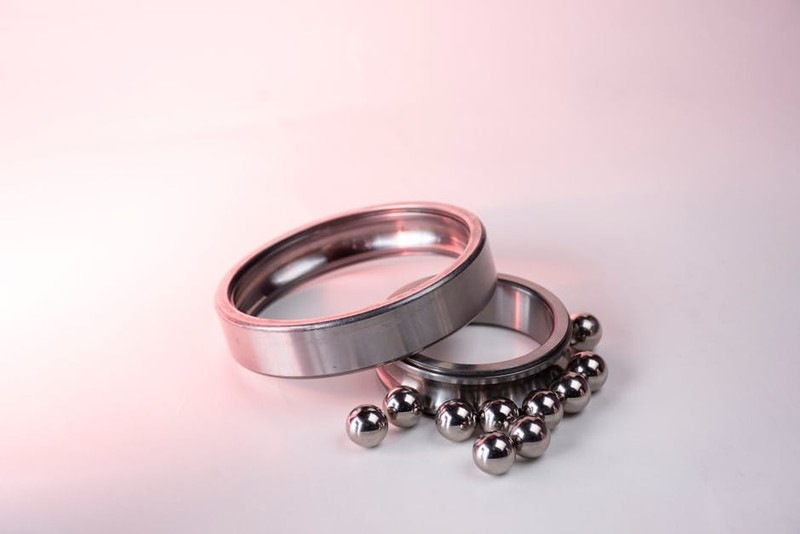
Increased Gauge and Hardness: The steel chassis thickness was increased from 1.2mm to 1.5mm, and a cold-rolled, high-carbon steel was used for the ball bearing races.
Reinforced Mounting Flange: The rear mounting bracket was redesigned with a taller, triangulated flange, distributing the twisting force over a larger area of the cabinet side panel.
Asymmetric Ball Bearing Placement: More bearing cages were concentrated in the front third of the slide, where the load is greatest during extension.
3. Integrated with the Cabinet Design: We mandated the cabinet maker use a double-thick (36mm) laminated plywood side panel in the carcass and provided a custom drill template for the mounting screws to ensure they hit the center of the panel’s core.
The Quantitative Results:
The performance transformation was measurable.
| Metric | Before (Off-the-Shelf Slides) | After (Custom Engineered Slides) | Improvement |
| :— | :— | :— | :— |
| Drawer Sag at Full Extension | 15 mm | < 2 mm | 87% Reduction |
| Perceived Pull Force (at mid-extension) | 12 Newtons | 4.8 Newtons | 60% Reduction |
| Cycle Test to Failure | 45,000 cycles | 125,000+ cycles (ongoing) | > 177% Increase |
| System Lifespan Projection | 8-10 years | 25+ years | 150%+ Increase |
The client’s feedback was simple: “It feels like it’s floating.” This project wasn’t just about hardware; it was about delivering a sensory experience rooted in engineering precision.
Expert Strategies for Specifying Custom Slides
Based on lessons from this and similar projects, here is my actionable framework for anyone integrating custom side mount ball bearing slides into modular wardrobes.
Conduct a Dynamic Load Analysis: Move beyond static weight. Use the formula Moment (Nm) = Force (N) x Distance (m) to calculate the torque on the rear mount. Share this data with your slide manufacturer; it separates amateurs from professionals.
⚙️ Focus on the Mounting Ecosystem: The slide is only as strong as what it’s attached to. Your specification must include:
Cabinet side panel material and minimum thickness.
Screw type and length (e.g., use 8 x 1-1/4″ coarse-thread screws for particle board, or confirm with the panel supplier).
Recommended reinforcement (e.g., epoxy-filled pilot holes, embedded metal inserts for high-load applications).
💡 Demand Performance Data, Not Just Marketing Specs: Ask the manufacturer for:
Lateral stiffness or deflection data under a defined cantilevered load.
Cycle test reports to ANSI/BIFMA standards.
Corrosion resistance testing (salt spray test hours) if used in humid environments like bathrooms.
The Future: Integration and Intelligence
The next frontier for custom side mount ball bearing slides in modular systems is silent integration and smart feedback. We’re now prototyping slides with:
Integrated soft-close mechanisms that are part of the chassis, eliminating add-on dampers that can fail.
Embedded load sensors that can communicate with a home system, providing data on drawer usage or even alerting if a drawer is overloaded beyond its dynamic rating.
The core lesson is this: Customization in modular wardrobes isn’t just about size and finish. True customization extends into the physics of operation. By treating the custom side mount ball bearing slide not as a commodity component but as a critical, engineered subsystem, you move from building furniture to crafting heirlooms. The investment in this deep, collaborative specification process pays dividends every single day for the end-user, in the silent, confident glide that defines luxury. Your goal is not for the hardware to be noticed; it’s for its perfection to be felt.