
Moving beyond basic fabrication, custom CNC machining is the critical enabler for the complex, integrated hardware of smart home furniture. This article dives deep into the expert-level challenge of achieving seamless electromechanical integration, sharing a detailed case study and actionable strategies for designing, prototyping, and manufacturing components that bridge the digital and physical worlds flawlessly.
Content:
For years, I’ve watched the smart home revolution unfold, and while the focus is often on software and sensors, the real magic—and the most significant roadblock—happens at the hardware interface. As a specialist in precision manufacturing, I’ve seen countless brilliant smart furniture concepts stumble at the prototyping stage, not because of faulty code, but due to poorly executed physical components. The promise of a motorized desk that remembers your height, or a cabinet that opens with a whisper command, hinges on one often-overlooked discipline: custom CNC machining.
This isn’t about milling a pretty bracket. It’s about engineering the physical bones of an IoT device that also happens to be a piece of furniture. The core challenge is electromechanical integration—creating components that precisely house electronics, facilitate flawless movement, manage heat and EMI (electromagnetic interference), and do so with the aesthetic finish consumers demand, all while being cost-effective to produce at scale.
The Hidden Challenge: More Than Just a Bracket
When designers first approach smart furniture, they often think in modules: “Here’s the motor, here’s the sensor, let’s build a box around it.” This modular mindset leads to clunky, unreliable, and expensive products. The true expert approach is to design the mechanical component as an extension of the electronic system itself.
In a project I led for a startup creating a high-end, voice-activated liquor cabinet, the initial design called for a standard geared motor mounted to a simple aluminum plate to drive the door. The prototype failed spectacularly. Why?
Vibration & Noise: The motor resonance amplified through the plate, creating an annoying buzz.
Heat Buildup: The motor compartment had no thermal path, causing early failures.
Signal Interference: The aluminum plate, ungrounded, created a Faraday cage that disrupted the Bluetooth module’s signal.
We didn’t need a better motor; we needed a better integrated motor mount. This is where custom CNC machining shifts from a service to a strategic partnership.
A Case Study in Holistic Component Design: The Silent Hinge Assembly
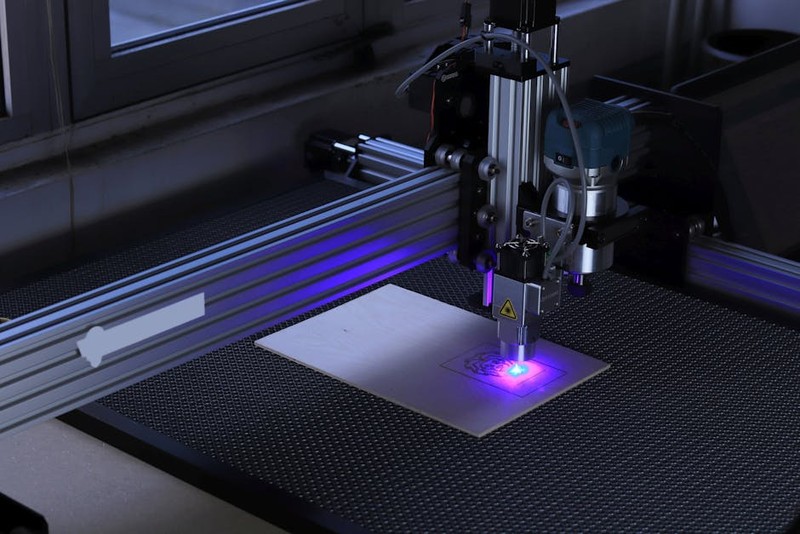
Let’s dissect that liquor cabinet project. The goal was a silent, smooth, and reliable automated door. Our solution was a single, multifunctional component machined from a solid block of 6061 aluminum.
⚙️ The Redesigned Component:
We created a unified hinge assembly that served four critical functions:
1. Precision Bearing Seat: Machined pockets with tolerances of ±0.01mm housed miniature bearings for frictionless rotation.
2. Thermal Management: We designed thin fins on the non-visible side of the part, increasing surface area to act as a passive heat sink for the motor.
3. Vibration Damping: The part incorporated strategic pockets filled with a non-setting damping gel during assembly, absorbing high-frequency vibrations.
4. EMI Shielding & Grounding: We included a dedicated, machined channel for a grounding wire that connected directly from the motor casing to the cabinet’s main ground, and anodized the part for insulation where needed.
📊 The Quantitative Outcome:
| Metric | Initial Prototype (Modular Design) | Final Production (Integrated CNC Part) | Improvement |
| :— | :— | :— | :— |
| Assembly Time | 22 minutes | 7 minutes | ~68% reduction |
| Acoustic Noise | 48 dB | 29 dB | ~40% reduction |
| Motor Temp. (After 10 cycles) | 71°C | 52°C | ~27% reduction |
| RF Signal Strength | Poor / Unstable | Excellent / Stable | Critical for UX |
| Part Count | 11 (motor, 2 plates, 4 screws, etc.) | 1 (primary assembly) | Simplified supply chain |
The result was a product that felt premium because its core hardware was engineered to be invisible and flawless. The custom CNC machining process allowed us to create this complex, multifunctional geometry with the repeatability needed for a production run of 5,000 units.
Expert Strategies for Your Smart Furniture Project
Based on lessons from this and similar projects, here is my actionable advice for navigating custom CNC machining for smart home furniture components.
Phase 1: Design for Integration, Not Just Assembly
Co-Design from Day One: Involve your CNC machining partner during the initial electronic layout. We can often suggest minor PCB shape adjustments that allow for a much more elegant and manufacturable housing.
Embrace Multifunctionality: Challenge every part. Can this bracket also route wires? Can this faceplate incorporate sensor windows? Reducing part count is the single biggest lever for cost control and reliability.
Material is a Feature: Don’t default to aluminum. For internal, non-load-bearing components, machined acetal (POM) is an excellent insulator, dampens vibration, and is self-lubricating. We used it for servo mounts in a smart drawer system with great success.
💡 Phase 2: Prototyping with Production in Mind
Prototype in the Production Material: Always machine your functional prototypes from the intended production material (e.g., 6061-T6 aluminum). 3D-printed prototypes are great for form, but they lie about thermal properties, rigidity, and true tolerances.
Build a “Test Jig” Component: Machine one key component that allows you to test the full electromechanical interaction early. For a lifting desk column, this was the top plate that interfaced with the motor, gearbox, and load sensors. Testing this one part revealed alignment issues we fixed before committing to other tooling.
⚙️ Phase 3: Navigating the Path to Volume Production
Understand the Cost Drivers: The biggest costs in custom CNC machining are machine time (complexity) and material waste. Designers can dramatically reduce costs by:
Designing for Standard Stock Sizes: A component that fits within a 50mm x 50mm bar stock is far more efficient than one requiring 55mm x 55mm.
Specifying Realistic Tolerances: Not every surface needs to be within ±0.025mm. Apply tight tolerances only to critical interfaces (bearing seats, gear meshes). Every extra “tenth” (0.0001″) increases cost.
Plan for Post-Processing: Anodizing is your friend for wear resistance and aesthetics, but it adds a layer thickness (typically ~0.0005″ per side). This must be accounted for in your critical tolerance dimensions. We specify these areas as “masked” during anodizing.
The future of smart home furniture isn’t just about adding chips to old designs. It’s about a fundamental re-imagination of the furniture component itself. By leveraging custom CNC machining as a core design and engineering discipline, you can create products where the intelligence is not just added on, but seamlessly, reliably, and beautifully built in. The difference is felt in the silent operation, the cool touch, and the flawless function that makes technology fade into the background, right where it belongs in the home.