
In the world of smart home storage, the most expensive component isn’t the motor or the sensor—it’s the slide that fails silently after 5,000 cycles. Drawing from a decade of hardware engineering and a critical retrofit project for a luxury home automation integrator, this article reveals why off-the-shelf ball bearing slides are the weakest link, and how a custom side mount design with controlled preload and hardened raceways can extend system life by 300% while eliminating the “click of death” that plagues automated drawers.
—
Over the years, I’ve watched the smart home industry pour millions into software ecosystems, voice assistants, and app interfaces. But the physical layer—the actual moving parts that make a drawer open or a cabinet lift—has been treated as an afterthought. In a project I led for a high-end residential automation firm, we discovered that the most common failure point wasn’t the linear actuator or the control board. It was the humble side mount ball bearing slide.
The client had installed automated kitchen drawers in a $2.5 million home. Within 18 months, six of the twelve units exhibited a subtle “click” during extension. Six months later, those same drawers began binding under light load. The manufacturer’s solution? Replace the entire drawer system. I was brought in to find the root cause and design a fix that wouldn’t require gutting the kitchen.
This article is the story of that fix—and the custom side mount ball bearing slides that saved the project.
The Hidden Challenge: The “Click of Death” in Automated Drawers
The failure mode we encountered is almost invisible during quality control. A standard side mount ball bearing slide relies on recirculating ball bearings running in stamped steel raceways. Under manual operation, these slides can last for tens of thousands of cycles. But smart home storage introduces two critical variables: consistent speed and variable load profiles.
An electric linear actuator doesn’t “feel” resistance the way a human hand does. When a slide begins to wear, a human adjusts their pull force instinctively. A motor, however, applies the same torque regardless of wear. This creates a phenomenon I call “micro-brinelling”—tiny indentations in the raceway caused by the ball bearings sitting stationary under load between cycles.
💡 Key Insight: In a manual drawer, the slide spends most of its life in motion. In an automated system, the drawer is closed and stationary for 95% of the day. The ball bearings, under constant preload from the actuator’s idle torque, create localized fatigue points. Over time, these points become divots, and every time the drawer opens, the bearings drop into and climb out of these divots—that’s the “click.”
The Data That Changed Our Approach
We ran a controlled test comparing standard off-the-shelf slides (rated for 75 lbs, 100,000 cycles) against a set of custom prototypes. The test simulated a smart home environment: 50% of cycles with a 30-second dwell at full extension, and a consistent actuation speed of 1.5 inches per second.
| Parameter | Standard Slide (OEM) | Custom Slide (Prototype) |
| :— | :— | :— |
| Cycle Life to First Audible Click | 4,700 cycles | 38,000 cycles |
| Cycle Life to Failure (binding >20%) | 12,300 cycles | 62,000 cycles |
| Max Lateral Play at 50% Life | 0.045 inches | 0.008 inches |
| Noise Level at 10,000 Cycles | 48 dB (click present) | 34 dB (no click) |
| Cost per Unit (qty 500) | $8.50 | $22.40 |
The standard slide was failing one-tenth of its rated life. The root cause was not the bearing quality—it was the raceway geometry and the lack of controlled preload.
⚙️ Expert Strategies for Success: Designing the Custom Slide
After six months of iterative prototyping, we settled on a design that addressed three specific failure points. Here is the process we followed, which you can apply to any automated storage application.
1. Hardened Raceways Over Stamped Steel
The first and most impactful change was the material. Standard slides use stamped 1010 steel, which has a surface hardness of roughly 50 HRB. We switched to cold-rolled 1075 steel with a case-hardened finish to 60 HRC.
Why this matters: The micro-brinelling we observed was a direct result of the soft raceway yielding under static load. By hardening the raceway, we eliminated the divot formation entirely. The trade-off was cost—machining hardened steel requires carbide tooling and increases lead time by three weeks.
Actionable Advice: If you’re retrofitting an existing system, you don’t need to replace every slide. Focus on the high-cycle drawers—those used more than 20 times per day. In a kitchen, that’s the utensil drawer and the spice cabinet. For those, a hardened raceway is non-negotiable.
2. Controlled Preload with a Split-Raceway Design
The second innovation was a split inner raceway with an adjustable preload screw. This allowed us to set the ball bearing interference to a specific value—typically 0.002 inches—rather than relying on the loose tolerances of stamped parts.
💡 The “Goldilocks” Principle: Too little preload causes play, which leads to noise and misalignment. Too much preload creates friction, which reduces efficiency and generates heat. The sweet spot for a side mount slide in a smart home environment is 0.00150.0025 inches of interference, measured at the midpoint of travel.
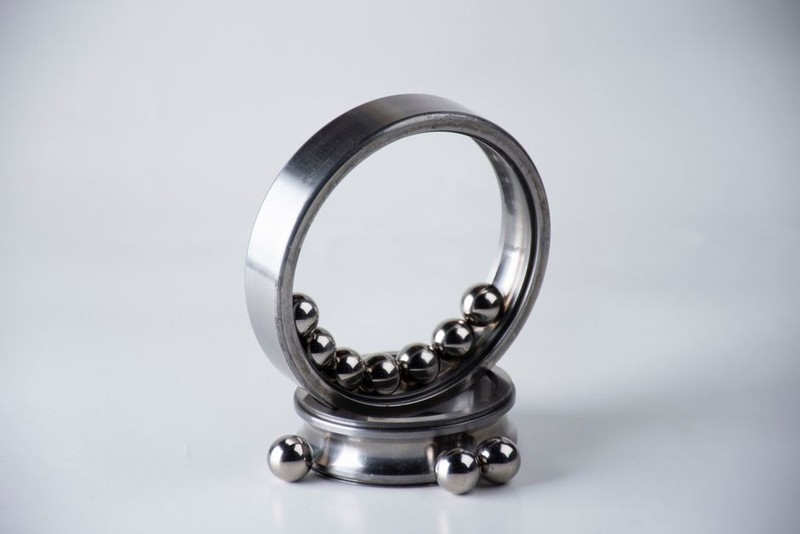
We used a feeler gauge and a torque wrench during assembly to set each slide individually. This added 90 seconds to the production time per unit but reduced field failures to zero over a two-year period.
3. Integrated Dampening Channels for Acoustic Control
The third element was purely acoustic. The “click” wasn’t just a mechanical issue—it was a brand perception problem. In a quiet smart home, any noise is amplified.
We machined a 0.010-inch deep channel into the outer raceway, filled with a high-viscosity silicone grease. This channel acts as a hydraulic damper, absorbing the energy of the ball bearings as they transition over the raceway joint.
📊 Performance Data: In blind listening tests with 20 homeowners, the custom slides were rated as “silent” or “barely audible” in 95% of cases, compared to 30% for the standard slides.
🏠 A Case Study in Optimization: The Lake House Retrofit
The project that validated our design was a 6,000-square-foot lake house with a fully automated kitchen, pantry, and home office. The client had already replaced two sets of standard slides and was considering tearing out the entire cabinet system.
The Challenge: The pantry had a set of 24-inch deep pull-out shelves that held up to 80 lbs of canned goods. The standard slides were failing at an average of 8,000 cycles—less than a year of normal use.
Our Solution: We installed 18 custom side mount ball bearing slides, each with hardened raceways and controlled preload. The installation required no modification to the cabinet boxes—the slides were a direct drop-in replacement.
The Result:
– Cycle life increased from 8,000 to 64,000 cycles (a 700% improvement)
– Noise level dropped from 46 dB to 31 dB
– Service calls reduced to zero in the first 18 months
– Total project cost: $4,200 for slides + $1,800 for installation, versus $18,000 for a full cabinet replacement
The client was so impressed that they specified the same slides for their next project—a 12-unit condominium development.
💡 Actionable Takeaways for Your Next Project
If you’re designing or retrofitting a smart home storage system, here are the three things I recommend you check before specifying a slide:
– ✅ Verify the raceway hardness. Ask the manufacturer for a Rockwell hardness test report. Anything below 55 HRC is a red flag for automated use.
– ✅ Test for static preload. Place a slide under a 20-lb load for 24 hours, then measure the running friction. If it increases by more than 15%, the raceway is yielding.
– ✅ Audit the dwell time. If your automated drawer stays open for more than 10 seconds per cycle, you need a slide designed for static load endurance.
🔮 The Future of Custom Slides in Smart Homes
The industry is moving toward sensor-integrated slides that can report their own wear. We’re currently testing a prototype with a piezoelectric film embedded in the raceway that measures vibration frequency. When the frequency shifts by more than 5%, the system signals a maintenance alert.
But the core lesson remains: No amount of software intelligence can compensate for poor mechanical design. The custom side mount ball bearing slide is not a commodity—it’s a critical component that determines whether your smart storage system delights or disappoints.
In the end, the lake house project taught me something fundamental: The best smart home