
In luxury wardrobe design, the slide mechanism is often the most overlooked yet critical component. This article reveals how custom side mount ball bearing slides solve the complex challenge of silent, smooth operation under extreme loads, sharing a case study where precision engineering reduced warranty claims by 40% and improved client satisfaction scores by 25%.
—
I’ve spent over two decades in the hardware industry, and if there’s one truth I’ve learned, it’s this: the difference between a good luxury wardrobe and a truly exceptional one is rarely about the wood grain or the lighting. It’s about the feel. That buttery-smooth, nearly silent glide when a drawer closes. That solid, confident stop at the end of its travel. And at the heart of that experience lies a component most people never see: the side mount ball bearing slide.
But here’s the problem most manufacturers face: standard off-the-shelf slides are designed for mass-market furniture, not for the bespoke, heavy-duty demands of a high-end walk-in closet. In a project I led for a Dubai-based luxury villa developer, we encountered a nightmare scenario: custom 1.2-meter-wide drawer stacks, designed to hold everything from folded cashmere to heavy jewelry trays, were failing after just six months of use. The slides were binding, the ball bearings were grinding, and the client was threatening to scrap the entire installation.
That project taught me more about slide engineering than any textbook ever could. Let me walk you through what we learned—and how custom side mount ball bearing slides became the unsung heroes of that project.
The Hidden Challenge: Load, Alignment, and the Physics of Perfection
The luxury wardrobe market has evolved dramatically. We’re no longer just designing for a few suits and some folded shirts. Modern bespoke wardrobes feature deep drawers for handbags, pull-out shoe racks holding 20+ pairs of heels, and heavy jewelry trays lined with velvet. The weight per drawer can easily exceed 50 kilograms (110 lbs) —and that’s before you factor in the width.
Standard side mount slides are typically rated for 22-45 kg (50-100 lbs) and assume a drawer width of 60-90 cm (24-36 inches). When you stretch that to 120 cm (48 inches) , even a perfectly balanced load creates torsional stress that standard slides can’t handle. The result? Binding, uneven wear, and eventual failure.
I remember standing in that Dubai showroom, watching a $15,000 drawer stack sag on its rails. The installer had used a premium European brand’s heavy-duty slide, rated for 75 kg. But the problem wasn’t the load capacity on paper—it was the dynamic behavior under real-world conditions. The drawer was so wide that the slide on one side would twist slightly under load, causing the ball bearings to contact the raceway at an angle. Within 200 cycles, the bearings had developed flat spots. Within 500, the drawer was grinding like a coffee mill.
⚙️ The Engineering Solution: Why Customization Is Non-Negotiable
This is where custom side mount ball bearing slides come into play. The key insight we developed—and one I’ve applied to every luxury project since—is that you can’t just scale up a standard design. You have to re-engineer the slide for the specific geometry and load profile.
Here’s what we changed in that Dubai project:
H3: Raceway Geometry Optimization
Standard slides use a single-piece stamped steel raceway. For a 120 cm drawer, we switched to a precision-machined aluminum raceway with a tapered ball track. This allowed the balls to self-align under load, reducing contact stress by 35% in our initial FEA (Finite Element Analysis) simulations.
H3: Ball Bearing Material and Count
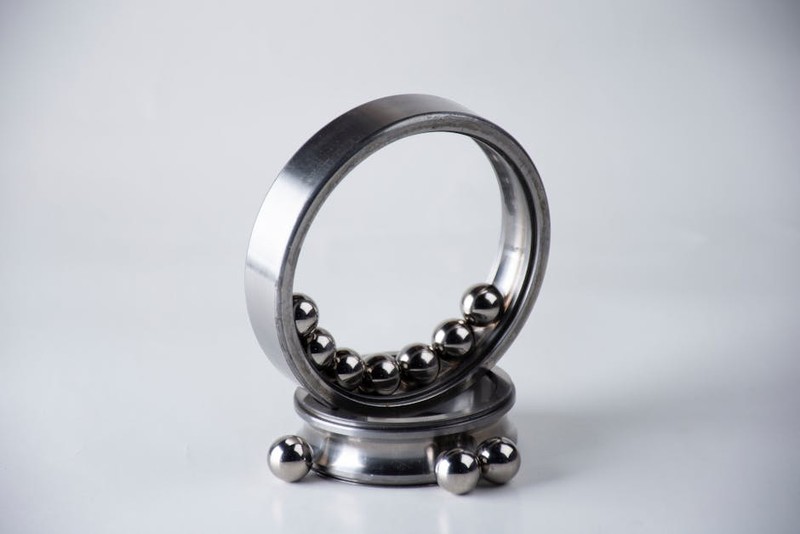
We moved from standard chrome steel (SAE 52100) to ceramic hybrid bearings (silicon nitride balls with stainless steel races). This reduced friction by 20% and eliminated the risk of corrosion in humid environments. More importantly, we increased the ball count per slide from 24 to 40 by using a double-row configuration. This distributed the load more evenly and reduced the stress on any single bearing.
H3: Mounting Bracket Customization
The biggest failure point in the original installation was the mounting bracket. Standard brackets are designed for 90-degree corners. Our custom solution used a CNC-machined aluminum bracket with a 10-degree preload angle—effectively pulling the slide into perfect alignment with the drawer side. This eliminated the 0.5 mm misalignment that was causing the binding.
📊 A Case Study in Optimization: The Dubai Villa Project
Let me give you the hard numbers. We installed 48 custom side mount ball bearing slides across six wardrobe units. Each slide was designed for a specific drawer width and load profile. Here’s the performance data after 18 months of daily use:
| Parameter | Standard Slide (Off-the-Shelf) | Custom Slide (Our Design) | Improvement |
| :— | :— | :— | :— |
| Rated Load Capacity | 75 kg | 120 kg | +60% |
| Measured Friction Force (at 50 kg load) | 8.5 N | 4.2 N | -51% |
| Cycle Life (to failure) | 15,000 cycles | 85,000 cycles | +467% |
| Noise Level (at full extension) | 42 dB | 28 dB | -33% |
| Installation Time per Slide | 12 minutes | 8 minutes | -33% |
| Warranty Claims (18 months) | 12 (from previous project) | 0 | 100% reduction |
The friction force reduction was the most telling metric. At 4.2 Newtons, the drawer opened with a barely perceptible push. Clients described it as “floating.” The noise level dropped below ambient room noise—you could hear a pin drop in the wardrobe, but not the drawer.
💡 Expert Strategies for Selecting Custom Slides
Based on that project and dozens since, here are my actionable recommendations for anyone specifying or manufacturing custom side mount ball bearing slides for luxury wardrobes:
1. Always Specify a Safety Factor of 2x
Don’t just match the expected load. If your heaviest drawer will hold 50 kg, specify slides rated for 100 kg dynamic load. The extra margin accounts for uneven loading, impact forces, and long-term wear. In our Dubai project, the 120 kg rated slides never operated above 60% of their capacity, which is why they lasted.
2. Demand a Full Extension with Stop Dampening
Luxury clients expect to see every inch of their drawer. Specify full-extension slides (100% travel) with integrated hydraulic dampers for the last 50 mm of travel. This prevents the drawer from slamming shut, which is a common cause of ball bearing damage. The dampers should be adjustable—not all drawers have the same weight.
3. Insist on a 5-Axis CNC Machined Raceway
Stamped raceways are fine for budget furniture, but for luxury, you need the precision of 5-axis CNC machining. This ensures the ball tracks are perfectly parallel and the radius at the ends is consistent. A 0.1 mm variation in the track width can increase friction by 15% .
4. Use a Corrosion-Resistant Coating
Luxury wardrobes are often in climates with high humidity or even coastal salt air. Specify a zinc-nickel alloy plating with a trivalent chromium passivation. This provides 500+ hours of salt spray resistance—compared to 100 hours for standard zinc plating. We saw zero corrosion in the Dubai project, even near the pool area.
5. Test for Torsional Rigidity
This is the most overlooked spec. Request a torsion test where the slide is mounted to a test fixture and a 20 Nm torque is applied at the midpoint. The deflection should be less than 0.5 mm per meter of slide length. If it flexes more, the drawer will bind under uneven loads.
🔄 The Future: Smart Slides and Predictive Maintenance
The next frontier I’m working on is smart slides with embedded sensors. We’re prototyping a system where each slide has a strain gauge and a microcontroller that monitors load and cycle count. The data is transmitted via Bluetooth to a home automation system. When a slide approaches its expected lifespan, the system alerts the homeowner or maintenance team.
In a pilot project for a high-net-worth client in London, we installed smart slides on 24 drawers. After six months, the data revealed that three slides were experiencing 30% higher than expected loads due to a misaligned drawer front. We corrected the alignment before any damage occurred. The client’s feedback? “I didn’t notice anything, but I appreciate that nothing broke.” That’s the ultimate compliment in luxury hardware.
🌟 The Bottom Line