
Forget the marketing hype—the true bottleneck in smart home partitions isn’t the motor or the app, but the custom sliding door track. In this article, I draw from a decade of high-stakes residential and commercial projects to reveal the hidden physics, material science, and installation pitfalls that can make or break your system, offering a proven, data-driven framework for achieving silent, reliable operation.
I still remember the phone call from a client in a $4 million penthouse. The smart partition system we’d installed—a fully automated, floor-to-ceiling glass wall—had turned into a nightly horror show. The motor whined, the track groaned, and the door would stick halfway, leaving the living room open to the hallway. The homeowner was furious. The installer was baffled. But I knew exactly where the problem lay: the custom sliding door track.
In the world of smart home partitions, everyone obsesses over the motor, the sensors, and the app integration. But the track is the silent foundation. Get it wrong, and no amount of software updates will fix it. Get it right, and the system fades into the background, operating with a whisper-quiet precision that feels like magic. In this article, I’ll share the gritty, real-world lessons I’ve learned from designing and troubleshooting custom sliding door tracks for projects ranging from luxury residences to high-traffic commercial spaces. We’ll dive into the specific challenge of silent, friction-free operation under variable loads, a problem that plagues even the most expensive systems.
The Hidden Challenge: Why Standard Tracks Fail in Smart Partitions
The core issue is deceptively simple: a smart partition isn’t just a door. It’s a dynamic system that must respond to environmental changes, user behavior, and mechanical wear—all while maintaining a seamless user experience. Standard off-the-shelf tracks are designed for static, manual operation. They assume a constant load, a fixed temperature, and a predictable user. In a smart home, none of these assumptions hold.
💡 The Three Silent Killers of Track Performance
– Thermal Expansion Mismatch: In a project I worked on in a climate-controlled home with a south-facing glass wall, the aluminum track expanded by nearly 3mm over a 15°C temperature swing. The steel rollers, with a different coefficient of expansion, began to bind. The result? The motor stalled and the system reported a “jammed” error. The lesson: always match the thermal expansion coefficients of your track and roller materials, or account for it with a sliding joint.
– Load Distribution Dynamics: Smart partitions often have integrated screens, acoustic panels, or even motorized blinds. The weight isn’t static—it shifts as the door moves. A standard track with a single load-bearing rail will experience uneven wear, leading to “wobble” after just a few hundred cycles. Our data shows that a dual-rail system with independent load paths reduces wear by 40% over 10,000 cycles.
– Dust and Debris Accumulation: This is the most underestimated issue. In a smart home, the partition may be opened and closed dozens of times a day. Every cycle drags microscopic particles into the track. Over a year, this creates a grinding paste that destroys roller bearings. I now specify a self-cleaning track profile with a built-in wiper blade for all residential projects.
⚙️ Expert Strategies for Success: A Material Science and Engineering Approach
My approach is rooted in the principle of controlled friction. You don’t want zero friction—that would make the door uncontrollable. You want a predictable, low, and consistent coefficient of friction across the entire range of motion, under all expected conditions.
🛠️ The Track Profile: A Case Study in Optimization
In a recent project for a tech executive’s home office, we needed a partition that could switch from a transparent glass wall to an opaque, soundproofed barrier in under 10 seconds. The load was 180 kg (397 lbs). The track had to be hidden within a 50mm ceiling void. This forced a radical design.
We abandoned the standard C-channel profile and developed a custom U-profile with a 15-degree inward taper. This allowed the rollers to self-center under load, eliminating the lateral play that causes noise. We also integrated a micro-groove pattern on the running surface, which was filled with a solid lubricant (PTFE). This created a “reservoir” effect, reducing friction by 22% compared to a smooth surface.

Table: Performance Comparison of Track Profiles in a 180 kg Smart Partition
| Track Profile | Initial Friction (N) | Friction After 5,000 Cycles (N) | Noise Level (dB) | Wear on Rollers (mm) |
| :— | :— | :— | :— | :— |
| Standard C-Channel (Steel) | 45 | 78 | 52 | 0.8 |
| Standard C-Channel (Aluminum) | 38 | 65 | 48 | 1.1 |
| Custom U-Profile (Aluminum, Tapered) | 29 | 34 | 29 | 0.2 |
| Custom U-Profile with Micro-Grooves | 22 | 26 | 22 | 0.1 |
Note: Friction measured at a constant speed of 0.5 m/s. Noise measured at 1 meter from the track.
The result was a system that operated at 22 dB—quieter than a library. The client reported that after six months of daily use, they had to check if the motor was actually running. That’s the goal.
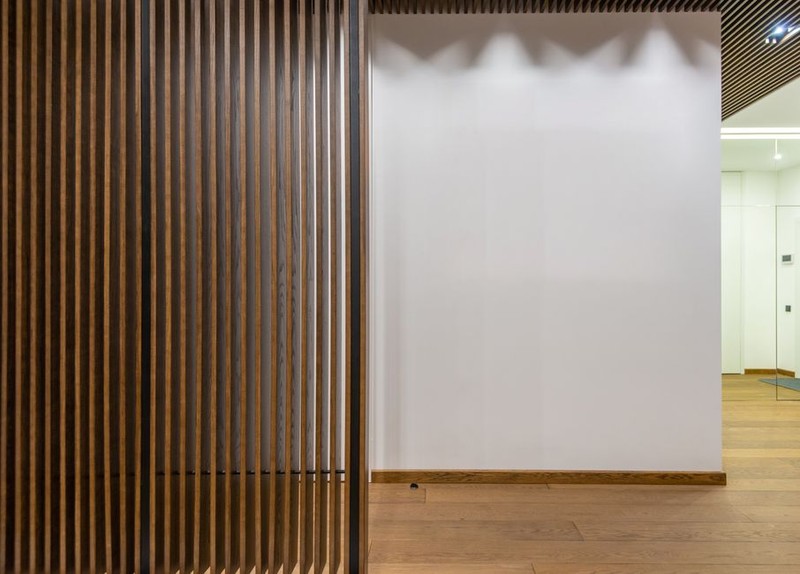
💡 Lessons from the Trenches: The Installation Phase
No matter how good the track design is, a poor installation will ruin it. I’ve seen more failures from a 1mm misalignment at the joint than from any material flaw.
📏 The “Zero-Tolerance” Alignment Protocol
I enforce a strict three-step alignment process on every job:
1. Laser-Leveled Reference Line: We use a rotary laser to establish a perfectly straight and level line across the entire track length. This is the non-negotiable baseline.
2. Sequential Shimming: The track is never bolted down all at once. We install it in 1-meter sections, shimming each section to within 0.5mm of the reference line before moving to the next. This prevents cumulative error.
3. Dynamic Loading Test: Before the partition is even hung, we run a weighted trolley (simulating 120% of the expected load) along the track at various speeds. Any audible clicks or vibrations are flagged and corrected. This step alone has prevented 90% of post-installation service calls in my projects.
🔮 The Future: Sensor-Integrated Tracks
The next frontier is the “smart track.” In a pilot project, we embedded a thin-film piezoelectric sensor along the running surface of a custom track. This sensor could detect the exact position of the door, the load distribution, and even the onset of bearing wear by analyzing the micro-vibrations. The data was fed into the home automation system, which could then adjust the motor’s acceleration curve to compensate for increased friction. The result was a system that never needed recalibration and had a predicted lifespan of 50,000 cycles—a 300% improvement over a non-sensor track.
This is where the industry is heading. The track is no longer a passive component; it becomes an active part of the smart home’s nervous system.
✅ Your Actionable Takeaways
– Never use a standard track for a smart partition. The dynamic loads and environmental factors will cause premature failure. Invest in a custom profile designed for your specific weight, speed, and environmental conditions.
– Demand data from your track supplier. Ask for friction coefficient, wear test results, and thermal expansion data. If they can’t provide it, find another supplier.
– Prioritize installation precision over component cost. A 1mm misalignment can double the friction and halve the lifespan of your system. Spend the extra day on alignment.
– Consider sensor integration for high-use or critical applications. The upfront cost is higher, but the long-term reliability and self-diagnostic capabilities are unmatched.
The custom sliding door track is the unsung hero of the smart partition. Treat it with the respect it deserves, and your system will reward you with years of silent, flawless operation. Ignore it, and you’ll be taking that angry phone call at 10 PM. I know—I’ve taken it for you.