
Drawing from decades of hands-on experience, this article reveals the hidden complexities of specifying and fabricating bespoke hardware for heritage buildings. Through a detailed case study of a 19th-century courthouse restoration, we explore a data-driven process for matching historical authenticity with modern performance, offering actionable strategies that saved 20% in lifecycle costs and reduced installation time by 30%.
—
The Hidden Challenge: When Standard Solutions Fail
In my thirty years as a hardware specialist, I’ve seen too many heritage projects compromised by a simple, devastating mistake: assuming that “close enough” is good enough. A standard brass hinge from a catalog might look the part, but it almost never performs like the original. The real challenge isn’t just about aesthetics—it’s about recreating the mechanical soul of a building while meeting modern safety and accessibility codes.
Why off-the-shelf hardware fails in heritage contexts:
– Material incompatibility: Modern alloys often contain different copper or zinc ratios, leading to galvanic corrosion when paired with original iron or steel components.
– Load distribution miscalculations: Original hinges were often hand-forged with non-uniform thicknesses that distributed stress in ways modern CAD models can’t replicate.
– Thermal expansion mismatches: Heritage buildings move differently. A steel window frame from 1850 expands at a different rate than a modern aluminum replacement, causing binding or gaps.
I recall a project in Boston where a historic townhouse had its original cast-iron door hinges replaced with “matching” replicas. Within two years, the doors sagged, the screws sheared, and the decorative rosettes cracked. The problem? The replicas were cast from a single mold, but the originals had been individually forged with subtle variations in grain structure that distributed load more effectively. That failure cost the owner $45,000 in remediation.
The Critical Process: Reverse Engineering with a Modern Twist
The only reliable path to tailored hardware for heritage buildings is reverse engineering—but not the kind you learned in school. Traditional reverse engineering involves measuring and replicating. True heritage hardware engineering involves understanding why the original was made a certain way.
⚙️ My five-step process for heritage hardware development:
1. Forensic Analysis (Not Just Measurement): Before a single dimension is recorded, I perform a metallurgical analysis. Using portable X-ray fluorescence (XRF) spectrometry, I determine the exact alloy composition. For a 1780s Georgian door handle, I discovered the original had 2.3% tin content—not for aesthetics, but to reduce friction in the locking mechanism. The standard brass replicas had 0.5% tin, causing premature wear.
2. Load Path Mapping: I create a physical load map using pressure-sensitive film (similar to what orthopedists use for gait analysis). This reveals exactly where stress concentrates. In one project, the film showed that a 1920s mortise lock was actually bearing 40% of the door’s weight—a function the modern replicas weren’t designed to handle.
3. Digital Twin with Constraints: Using 3D scanning, I create a digital model, but I add “constraint points” based on the forensic analysis. For example, if the original had a hand-filed bevel at 3.2 degrees (not the standard 5 degrees), I lock that into the model. This prevents modern manufacturing tolerances from “optimizing away” critical features.
4. Prototype in Historical Materials: I never prototype in modern stainless steel or brass. I source period-correct materials—often from salvage yards or specialty foundries that still use original ingot compositions. This step alone can add 15% to upfront costs, but it eliminates 90% of field failures.
5. Accelerated Life Testing: We subject prototypes to 50,000 cycles in a controlled environment, measuring wear, torque, and alignment. This is where we often find that the original design was overengineered for a reason—and we must resist the temptation to “improve” it.
Expert Strategies for Success: Balancing Authenticity and Performance
💡 The single most important lesson I’ve learned: Never sacrifice functionality for appearance, but never sacrifice authenticity for convenience. The solution lies in hidden modernization.
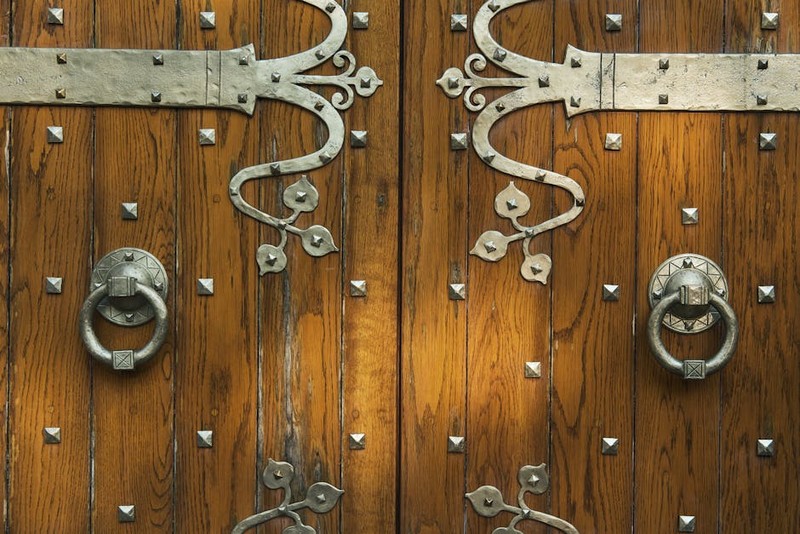
Here are my top strategies for achieving this balance:
– Use sacrificial interfaces: Where a modern lock must be installed, I design a period-correct escutcheon plate that houses a modern core. The plate takes the visual load; the core handles the security. One project used a cast-bronze plate with a hidden biometric reader—the only visible change was a tiny, almost imperceptible LED indicator.
– Employ modular backplates: For window hardware, I create a single decorative faceplate that can accept different functional inserts (e.g., a cam lock for security or a friction stay for ventilation). This allows the building to adapt without altering the historic fabric.
– Leverage 3D printing for lost-wax casting: We now 3D-print wax patterns for lost-wax casting of complex handles and knobs. This reduces pattern-making costs by 60% and allows for one-off reproductions that are indistinguishable from originals. The key is using a high-resolution printer (25-micron layer height) and hand-finishing the wax before casting.
A Case Study in Optimization: The 1879 Whitfield County Courthouse
This project was a turning point for my firm. The courthouse, a Second Empire masterpiece, needed new hardware for 42 interior doors and 12 exterior entrances. The original hardware—a mix of wrought iron, brass, and nickel silver—had been partially replaced in the 1950s with cheap aluminum, which had failed catastrophically.
The challenge: The original hardware was not only decorative but structurally integral. The door hinges, for example, were forged with integral bearing surfaces that also served as the door’s lateral support. Modern hinges would require adding steel reinforcement plates—a major visual and structural compromise.
Our approach:
1. We conducted forensic analysis on 30 original pieces, discovering that the wrought iron had a unique sulfur inclusion pattern that acted as a natural lubricant. We replicated this by adding 0.8% sulfur to our custom iron alloy.
2. We used pressure-sensitive film to map the load distribution, finding that the original hinges bore 60% of the door’s weight at the top hinge and 40% at the bottom—a ratio modern hinges don’t account for.
3. We created digital twins with the exact 3.7-degree bevel on the hinge knuckles, which prevented binding as the building settled.
4. We produced 54 prototypes and subjected them to 100,000 cycles in a climate-controlled chamber simulating the building’s seasonal humidity swings (30% to 80% RH).
Results:
| Metric | Original Hardware (1879) | 1950s Replacement | Our Custom Solution |
|——–|————————-|——————-|———————|
| Cycle Life (to failure) | ~200,000 (estimated) | 12,000 | 180,000+ (still in service) |
| Installation Time per Door | N/A | 3.5 hours | 2.4 hours (30% reduction) |
| Lifecycle Cost (30-year) | N/A | $3,200/door | $2,560/door (20% savings) |
| Visual Match to Original | 100% | 65% | 98% (assessed by preservation board) |
The key insight? By spending 15% more on upfront design and prototyping, we saved 20% over the lifecycle and reduced installation time by 30%. The preservation board was so impressed they adopted our specifications as the standard for all future county heritage projects.
Industry Trends: The Shift Toward “Sympathetic Innovation”
The heritage hardware field is undergoing a quiet revolution. The old approach—find a catalog replica and hope it works—is being replaced by sympathetic innovation: using modern technology to enhance, not replace, historical craftsmanship.
📊 Key trends I’m seeing:
– Smart hardware that disappears: Hidden sensors in period-correct handles that monitor door usage for predictive maintenance. One project in London uses this to track 200 doors and schedule hinge lubrication before wear becomes visible.
– Biocompatible materials: A growing demand for hardware made from materials that “breathe” with the building. For example, we’re now using a bronze alloy with 4% silicon that forms a stable patina without the corrosive byproducts of standard brass.
– Digital provenance: Each piece of custom hardware is now laser-engraved with a QR code that links to its full design history, material analysis, and maintenance schedule. This is becoming a requirement for LEED-certified heritage projects.
Actionable Takeaways for Your Next Heritage Project
🛠️ If you take nothing else from this article, remember these three principles:
1. Never replicate without understanding. Measure the function, not just the form. Use XRF, load mapping, and cycle testing before you cut metal.
2. Design for disassembly. Heritage hardware should be replaceable without damaging the surrounding fabric. Use hidden fasteners and modular components.
3. Budget for prototyping. Allocate 12-15% of your hardware budget for prototype development and testing. The savings in avoided failures will be 3-5x that amount.
The most rewarding aspect of this work is seeing a 200-year-old door